SHIPPED
OnlinePajak
Modernizing Indonesia’s go-to tax and invoice system.
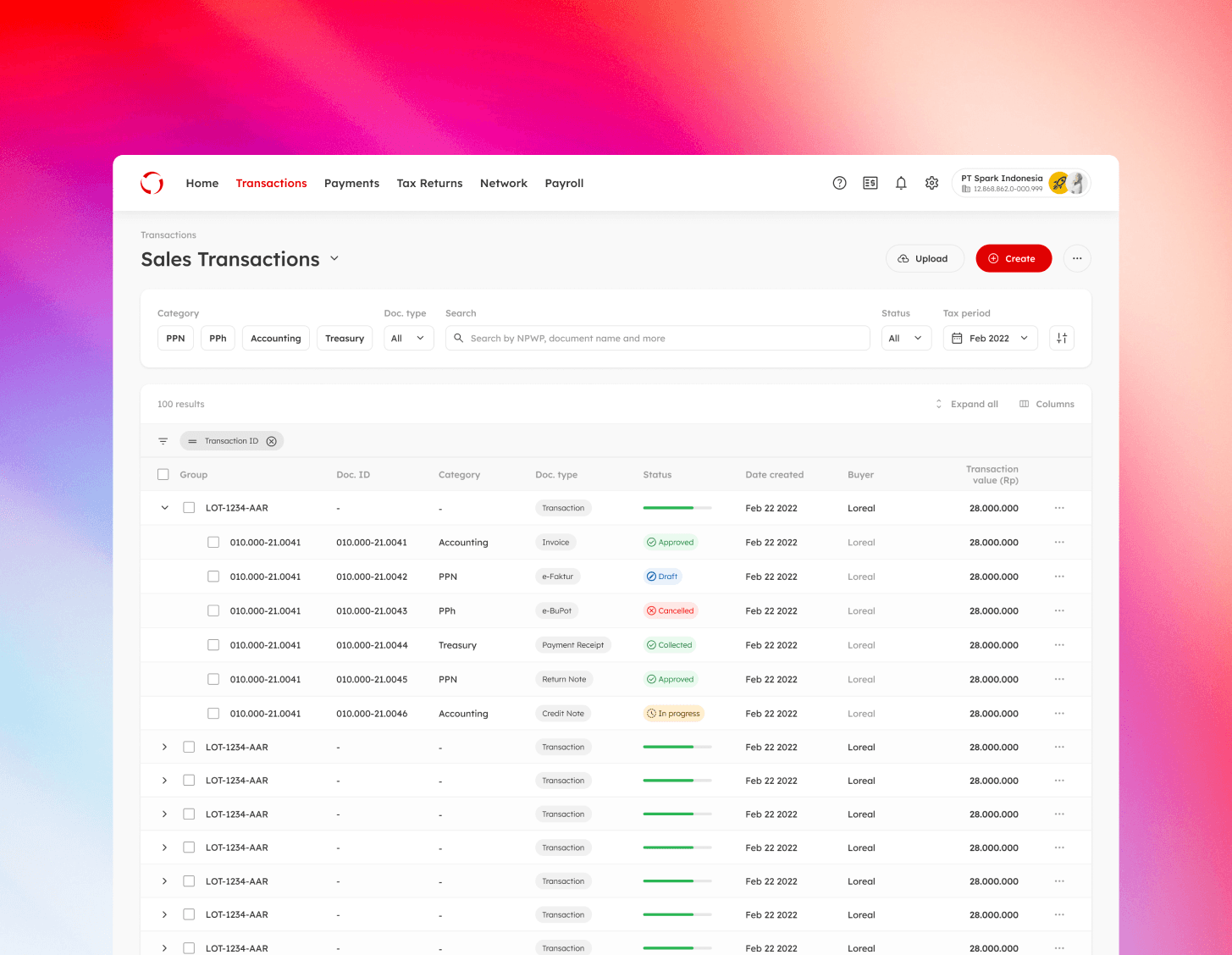
OnlinePajak is a Series-C SaaS platform serving 3M+ users across Indonesia, backed by Sequoia, VISA, Warburg Pincus, and Tencent. I led a research-driven revamp of its Transactions and Invoice Management platform to stay ahead of emerging competitors and drive user activation—while designing for a market outside my own.
Skills
Webapp design UX Research Design Ops
Role
Senior Product Designer
Timeline
1 Year 5 Months
Company
OnlinePajak
The challenge
"People come to us to pay taxes. How can we build on this & offer a solution that covers the start of the journey from the creation of invoices to tax compliance as well?"

Charles Guinot - CEO, OnlinePajak
The process
The goal was clear: understand why users were dropping off and find a way to bring them back. But as a Singaporean designing for Indonesian users, the real challenge lay in understanding their habits and mindset around digital tax processes, that is, a space that’s both culturally and contextually nuanced.
I started by approaching the problem systematically before rallying my team of three product designers, a UX researcher, and a graphic designer. Together, we shaped our approach into four key phases: Comprehension, Experimentation, Concept Testing, and Implementation.
Comprehension phase
Defining the product vision
To ground the project, I began by holding one-on-one conversations with key stakeholders including Product Owners, the CEO, the Customer Support team, and Tech Leads. The goal was to understand, in their own words, what the product’s vision truly was and where it was falling short. Through these discussions, it became clear that Transactions was the company’s primary vertical, but the bigger challenge lay in shifting the product’s USP from tax management to invoice management. This repositioning conflicted subtly with the brand’s “tax-first” identity. Beyond strategy, I uncovered several recurring pain points: limited awareness of the product’s full offering, fragmented user journeys within the platform, and a lack of prioritization in feature planning. These insights set the stage for how we would approach the redesign moving forward.
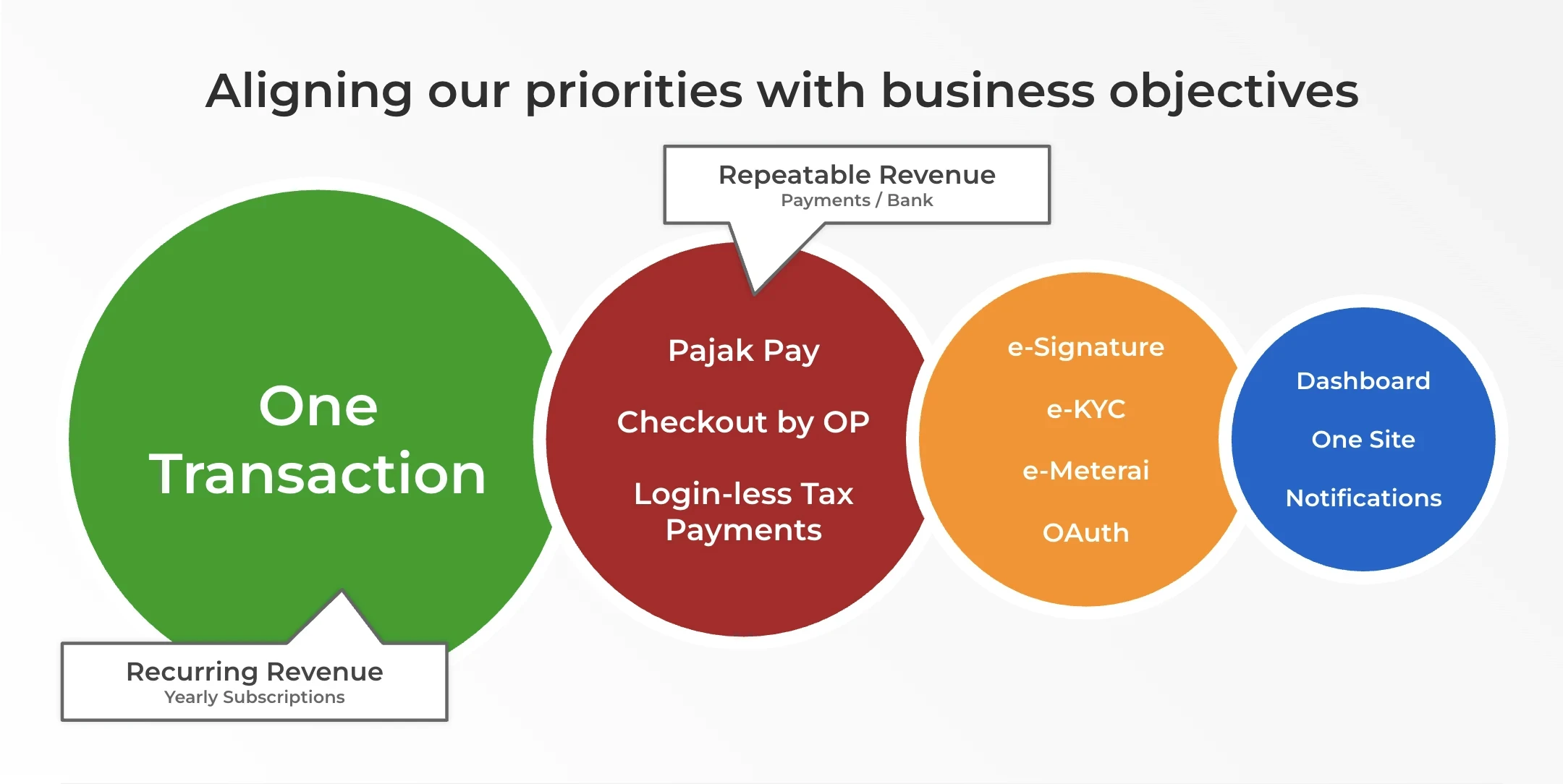
Shifting from percentage cuts to recurring revenue from subscriptions.
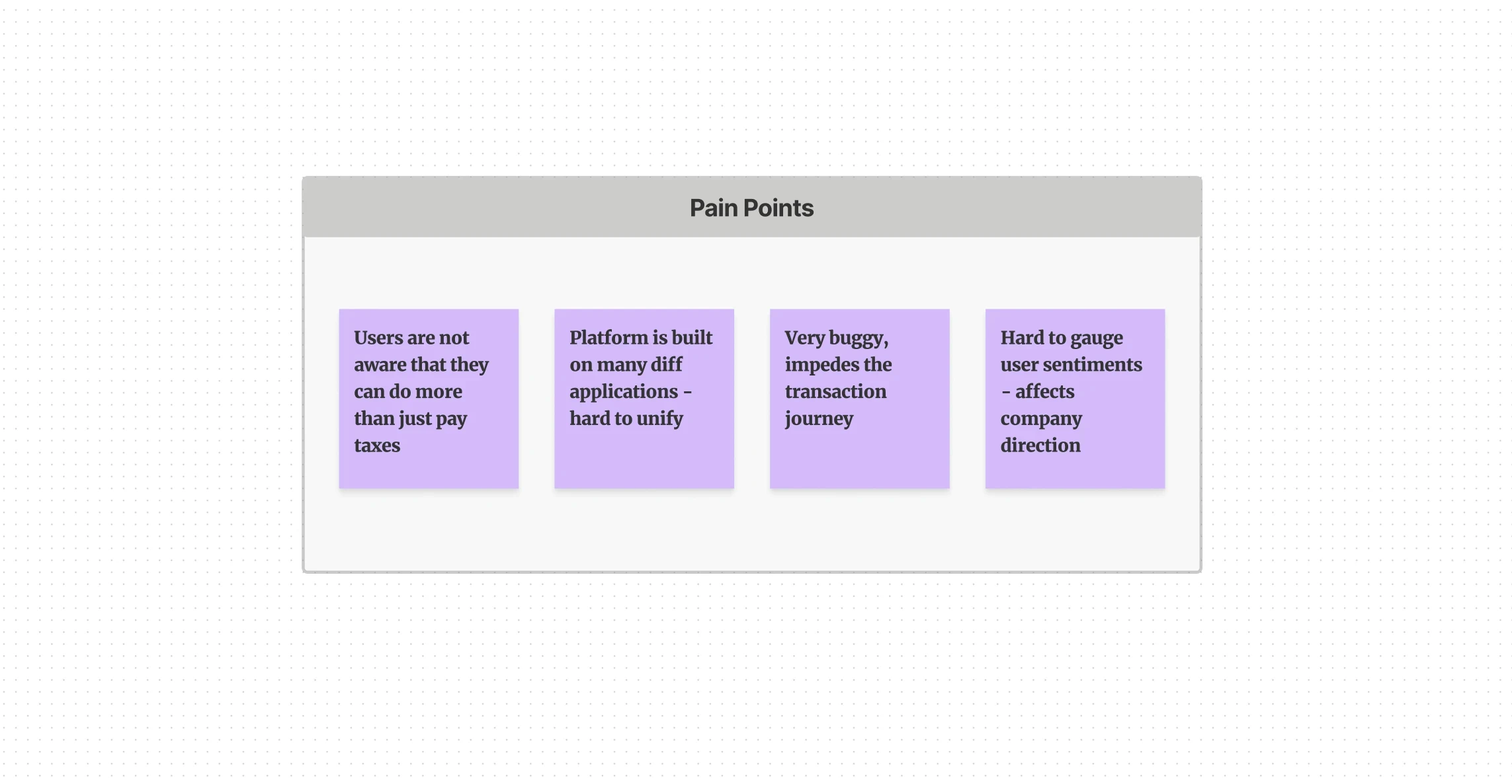
Pain points gathered from 1:1s across the company.
Comprehension phase
Heuristics analysis
Next, my team and I examined the existing Transactions experience through a UX lens. Our goal was to identify every friction point and usability gap within the main user journeys. Each issue we uncovered was documented as a hypothesis to be validated later through user interviews, ensuring that our assumptions aligned with real user behavior.
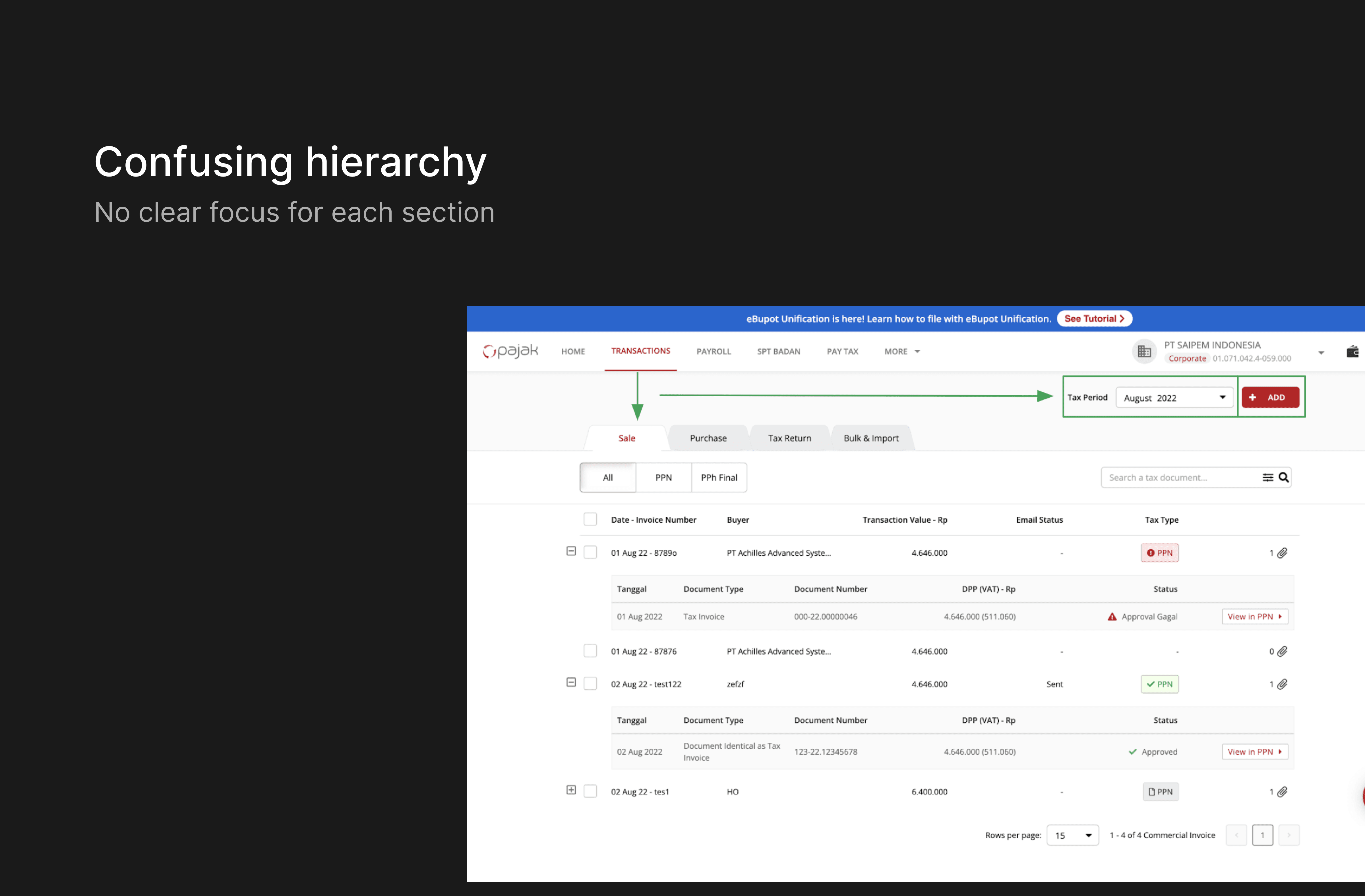
Multiple levels of navigation within a page that determined singular results
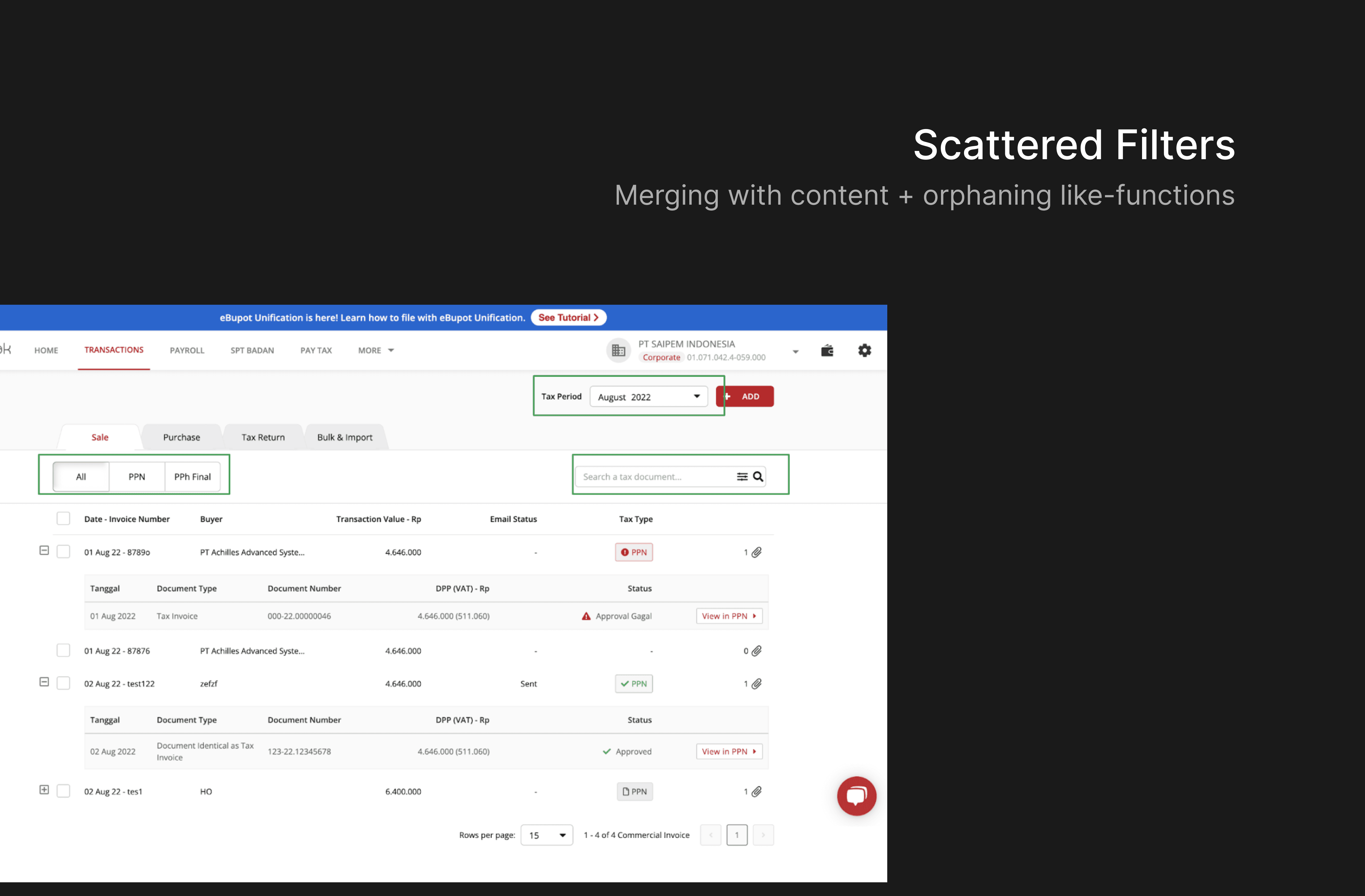
Filters were all over the place, sometimes with users not even being aware of them.
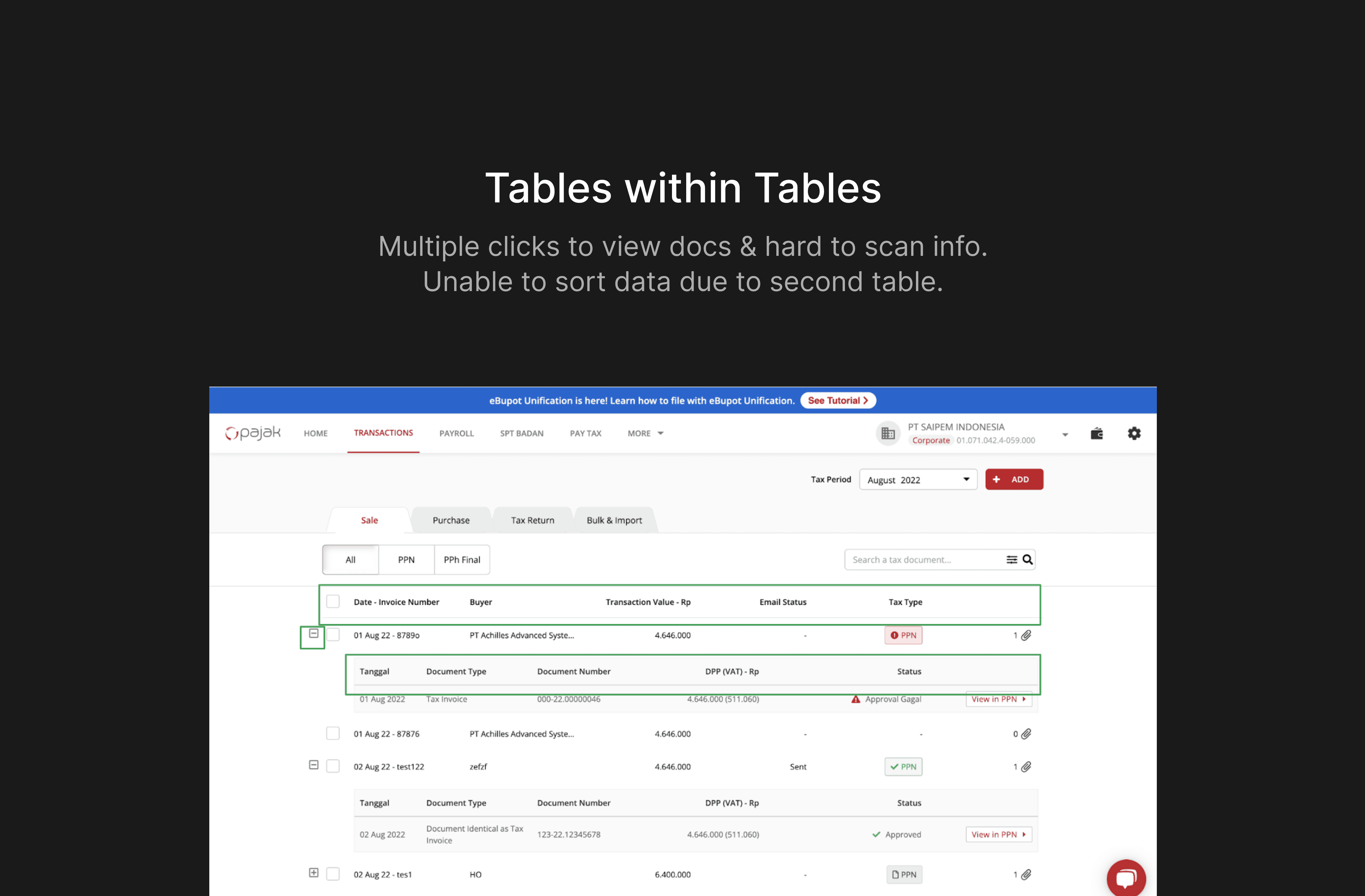
Russian-doll style tables that prevented the sorting and quick view of data.
Comprehension phase
What's out there
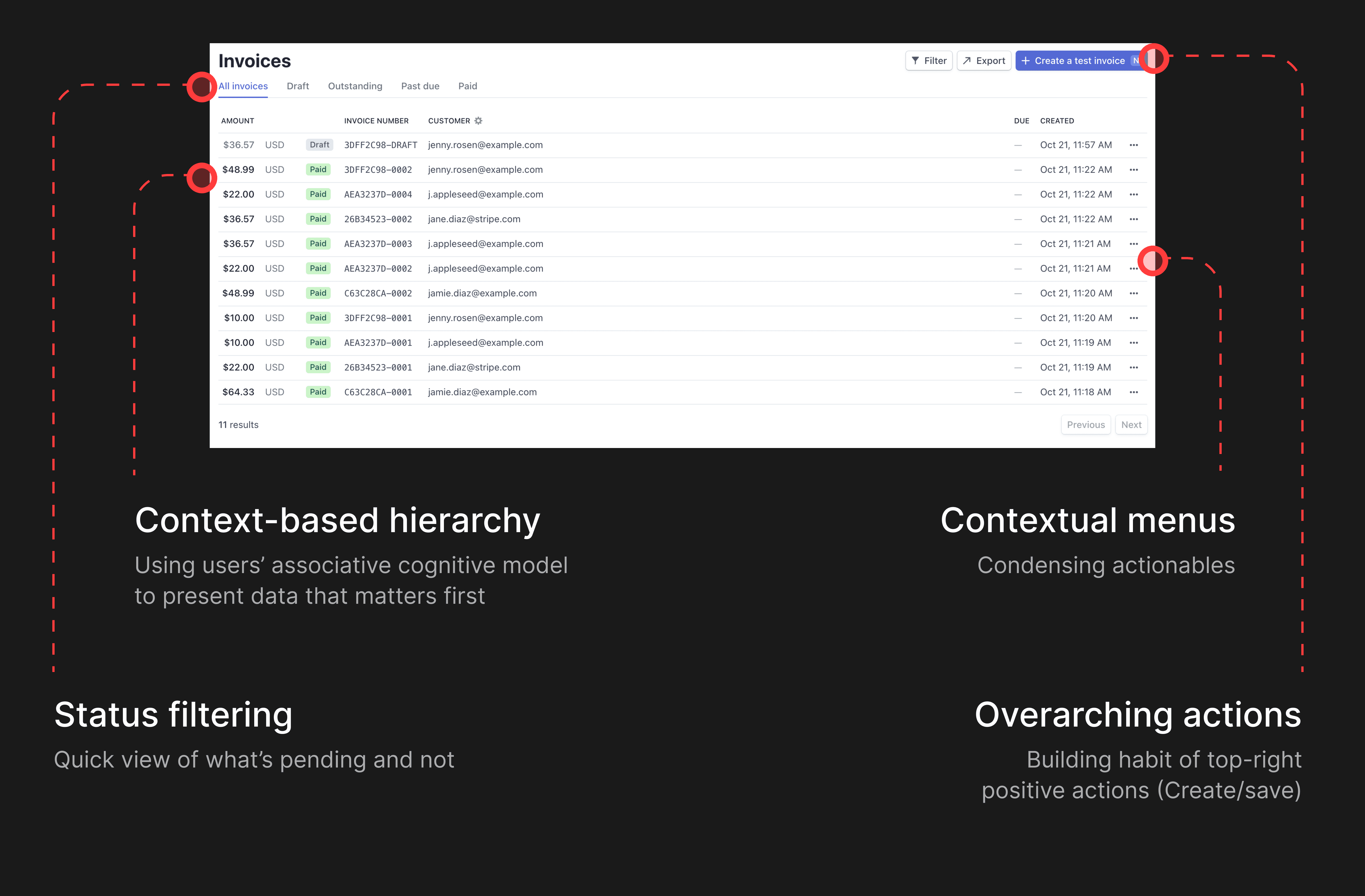
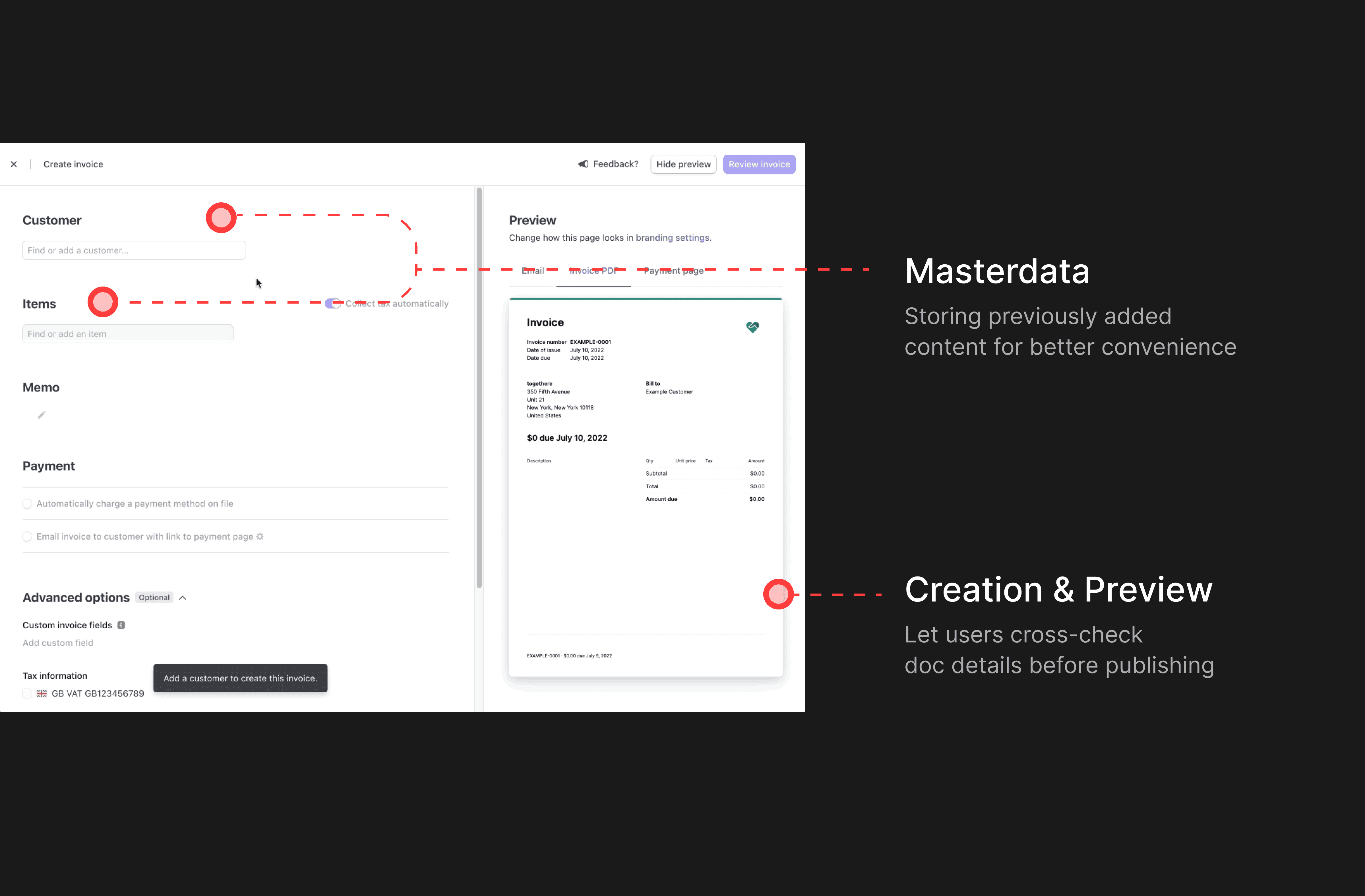
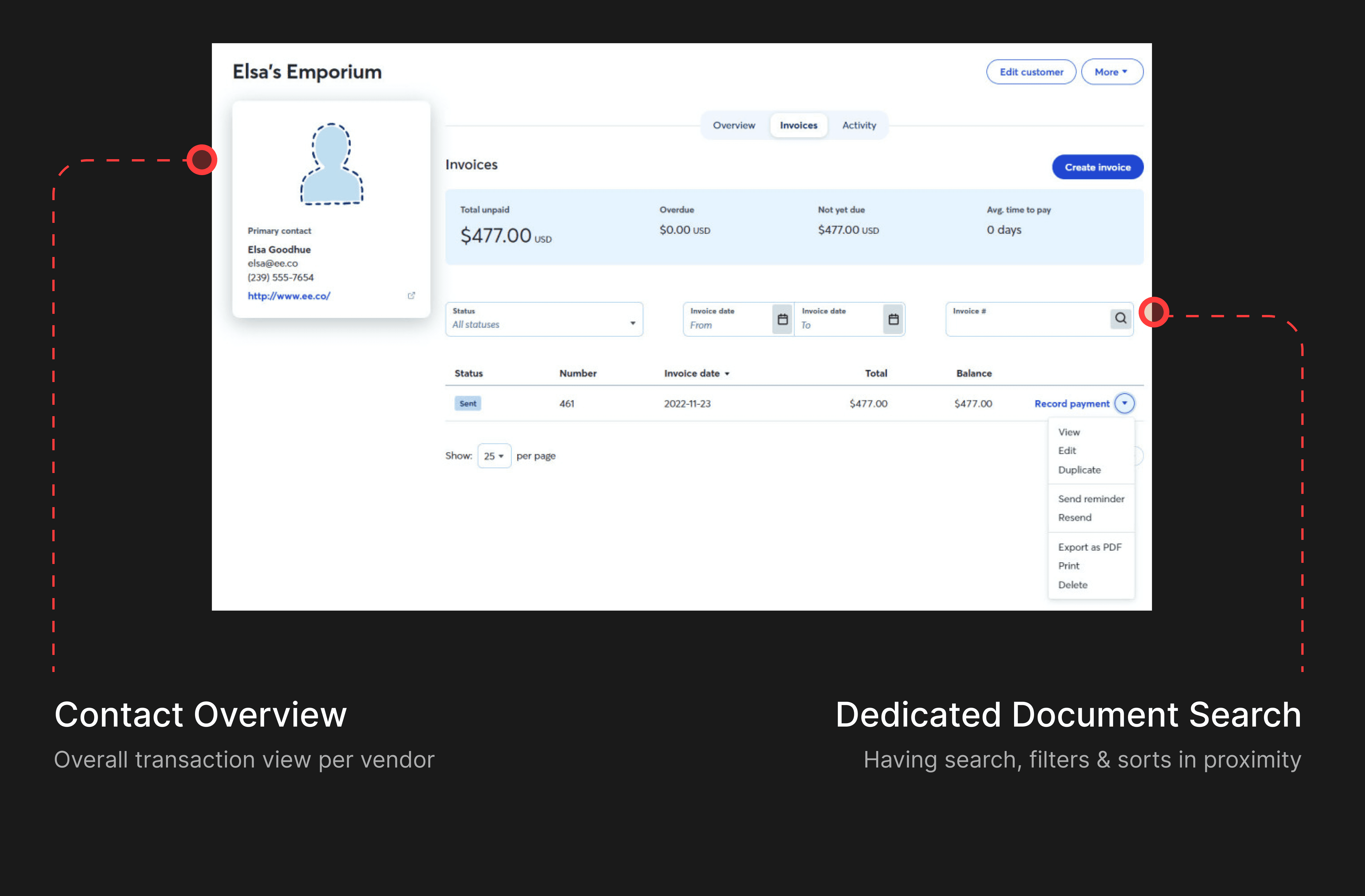
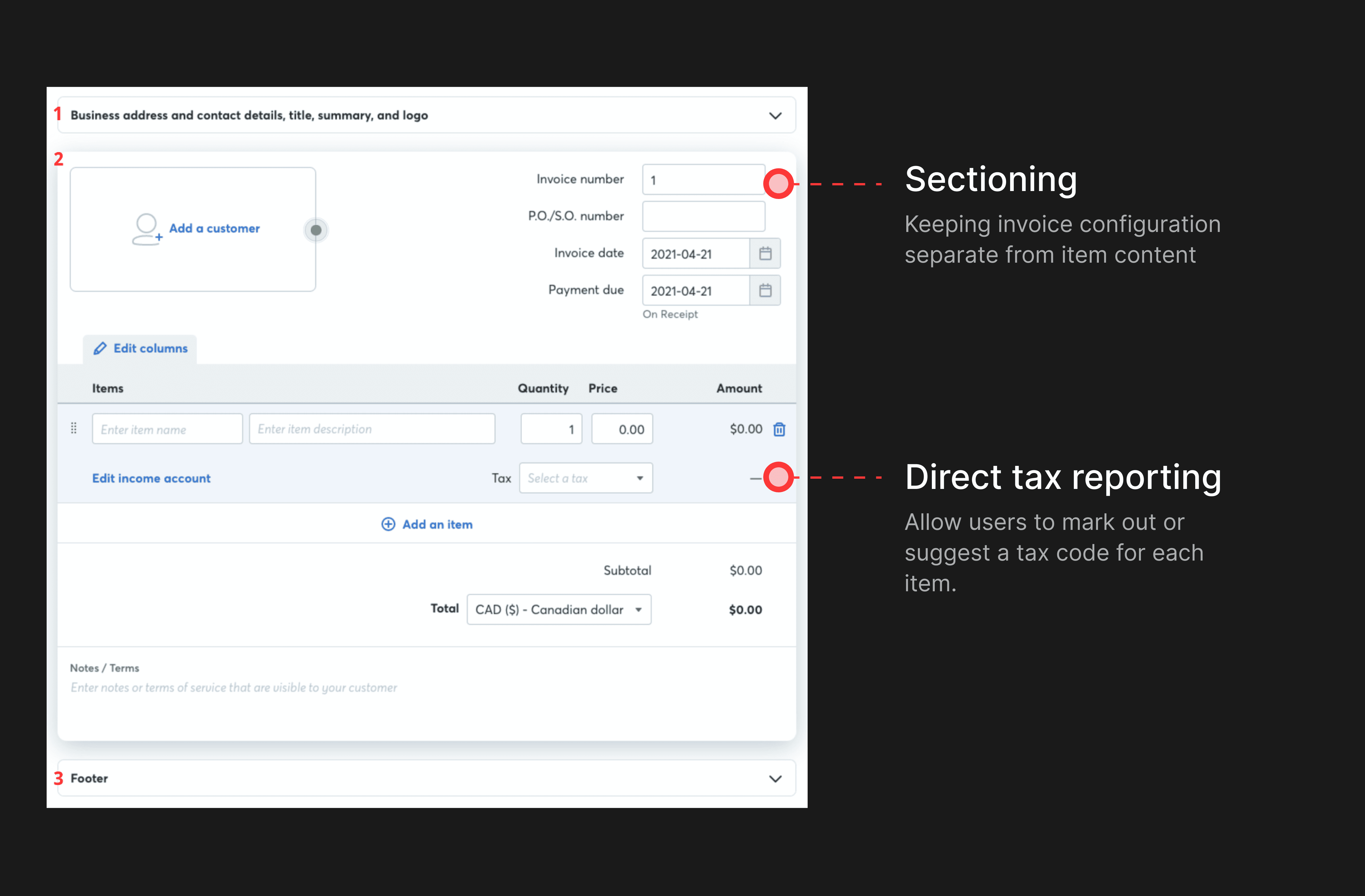
Beautiful work is often inspired by what already exists. To ground our thinking, we created a shared Figma board to map out how competitors with invoice management as their core offering approached similar challenges. We studied their processes critically, noting what worked well and where there were opportunities to improve. For benchmarking, we focused primarily on Stripe and Wave, both strong references in usability and visual clarity for financial workflows.
Experimentation phase
Research preparation
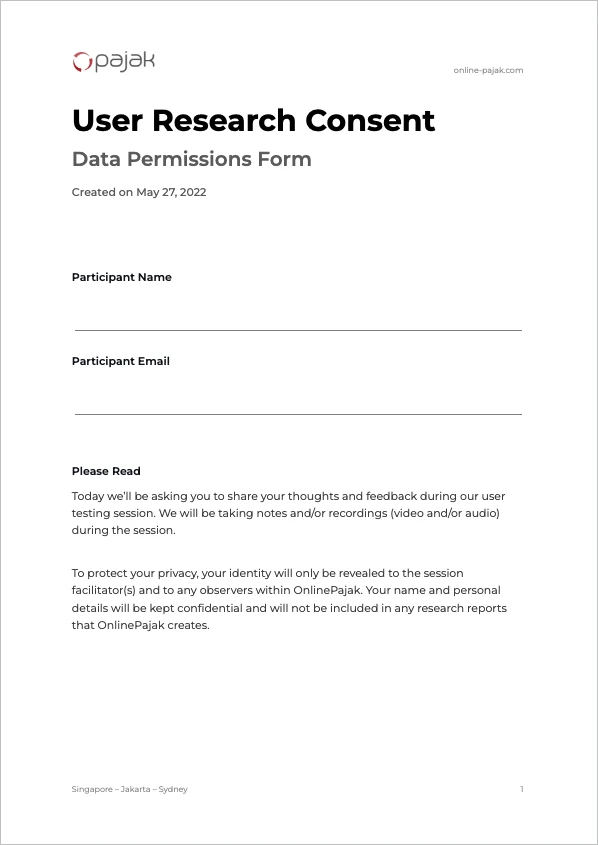
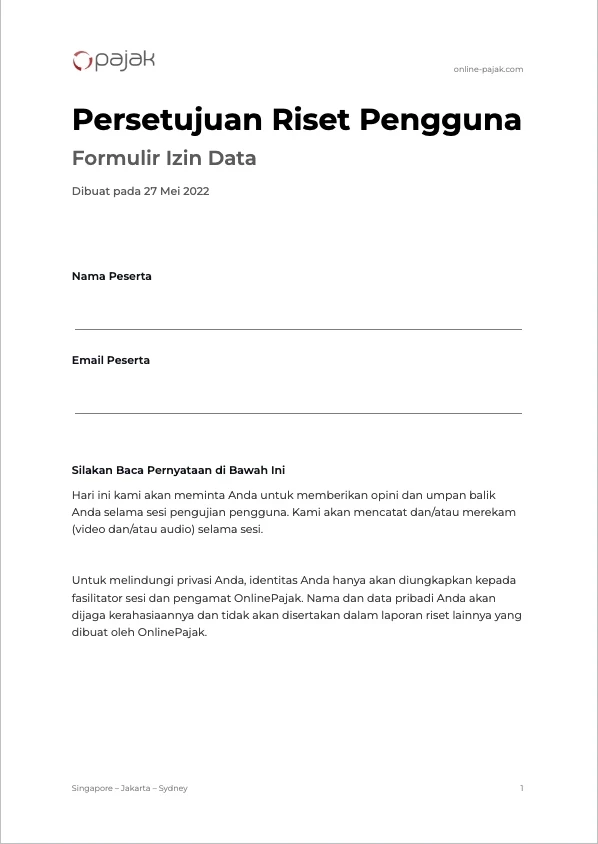
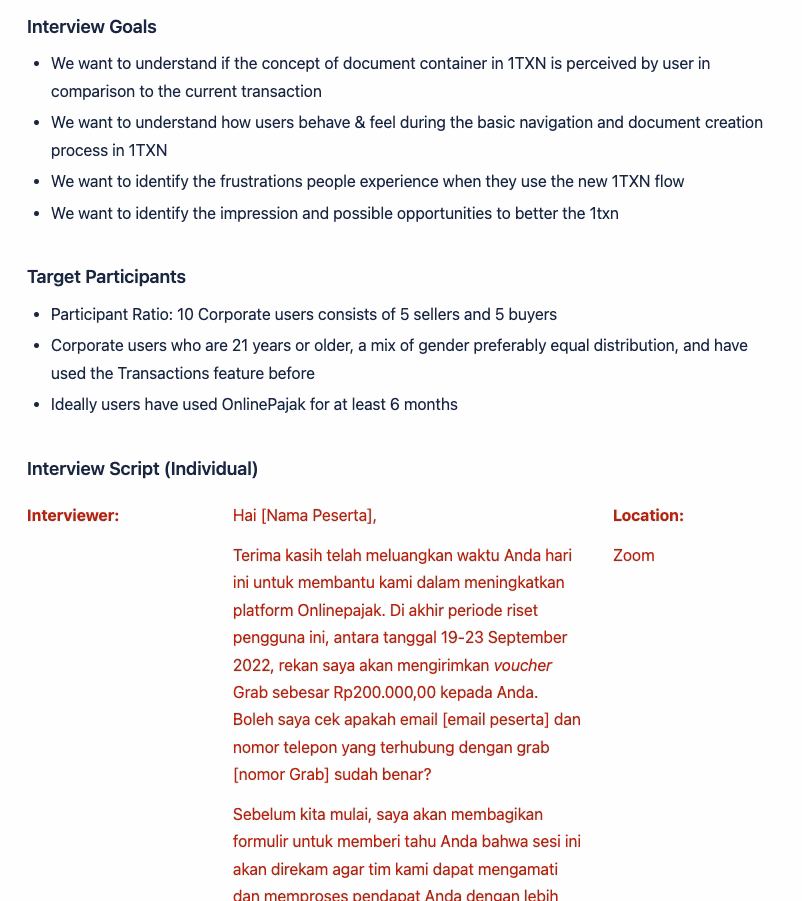
To make the most efficient use of our time, I began preparing the legal and permissions documents for upcoming user interviews in both English and Bahasa. Alongside this, I developed the interview script, structured around three core business archetypes: SMEs, startups, and large enterprises.
The objective was to have participants walk through the existing invoice creation flow, followed by the redesigned version. Throughout the sessions, we prompted open-ended, qualitative questions to capture sentiment and paired them with CSAT ratings to quantify the redesign’s impact.
Experimentation phase
Revamping key journeys
Using the pain points gathered from the Customer Support team and the user stories shared by Product Owners, we began mapping out an improved user flow built around a new concept: One Transaction.
The idea behind One Transaction was simple but powerful. Each transaction would act as a filing system that grouped together its invoice, related tax invoice (e-Faktur), withholding tax document (e-BuPot), and payment receipt—making it easier for users to reconcile documents across vendors.
With this foundation in place, we moved quickly into design. We started by sketching rough wireframes, then developed high-fidelity interactive prototypes for the upcoming user testing sessions. I delegated the creation of secondary screens to my product designers while focusing on preparing a streamlined design system to speed up future builds.
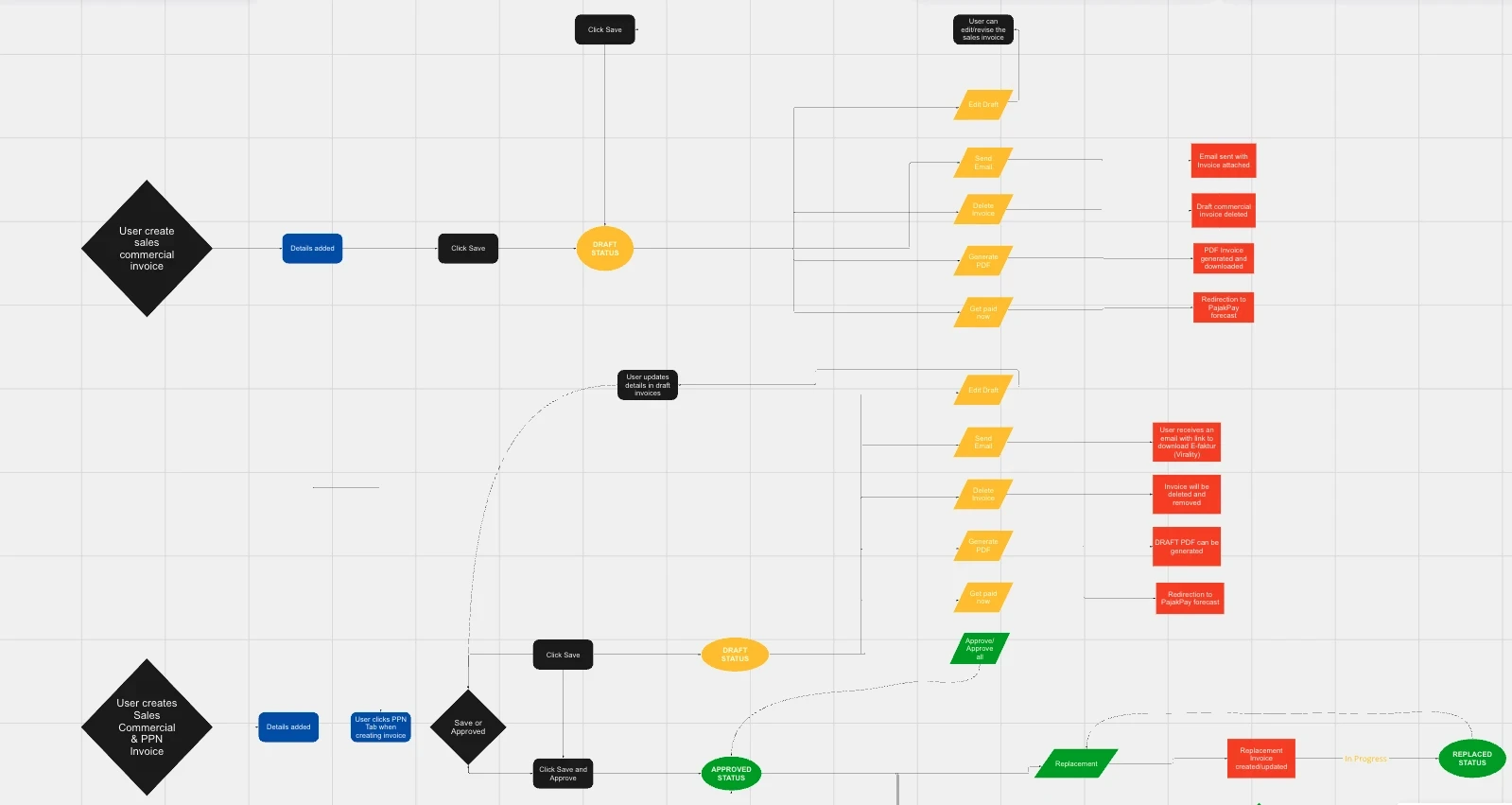
Crafting the Information Architecture of the revamp
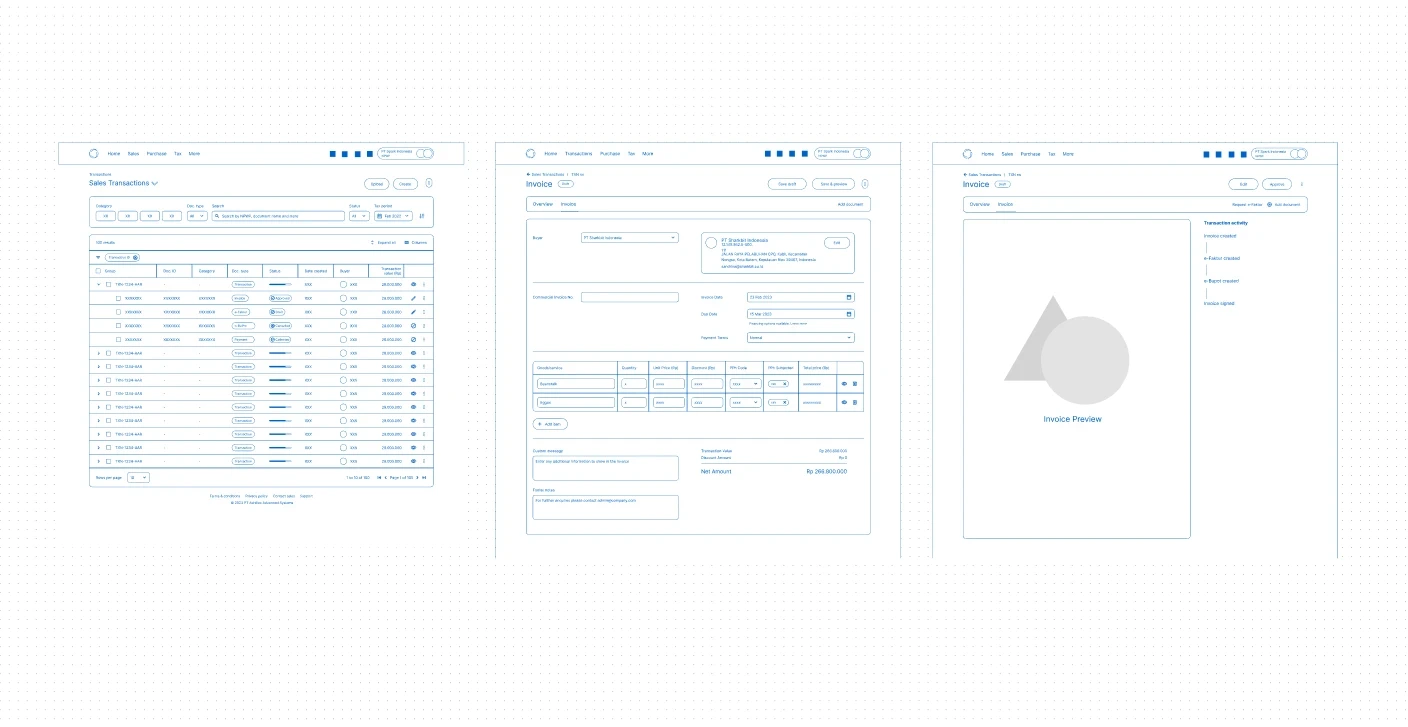
Low-fi sketchups of the revamp concept
Hi-fi testing prototype
Experimentation phase
Local research challenges
Running user research across markets often reveals insights beyond product behavior. In our case, it surfaced cultural nuances that directly impacted how we conducted and managed the study. These learnings were as valuable as the research findings themselves.
Adapting incentives for local context
It wasn’t all smooth sailing. We quickly discovered key cultural differences between Singapore and Indonesia that affected participant engagement. Sign-ups for user interviews were lower than expected, which led us to revisit our reward strategy. While Singaporean users generally preferred cash payments, Indonesian participants were far more responsive to GoPay vouchers, which offered greater value for everyday needs such as groceries. Adjusting our incentives to fit the local context helped improve participation rates and trust in the research process.
Screening for relevant participants
Participant quality also became a challenge. During screening, we found that some respondents came from rural areas with limited exposure to digital tools. This led us to tighten our screening criteria, ensuring we spoke with users who matched our target segments, even if it meant extending the research timeline.
Concept testing phase
Interviewing users
For this phase, I delegated the user interviews to our Bahasa-speaking UX Researcher, training her on body language cues, neutral prompting, and maintaining a fair testing environment. We learned early on that having two interviewers present made participants less responsive, so the researcher led the sessions independently while recordings were reviewed later for insights. Across ten interviews (five sellers and five buyers), we uncovered consistent patterns that were mapped into an affinity board in real time. The synthesized findings were then presented in a visual deck for stakeholders and circulated company-wide, informing several upcoming product decisions for the Transactions team.
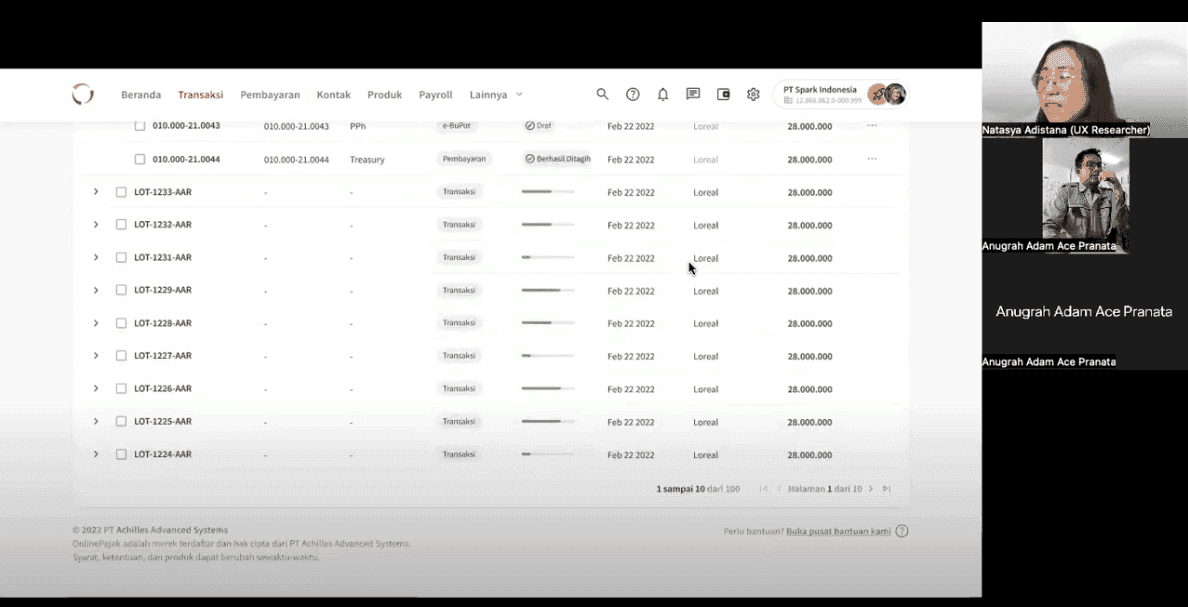
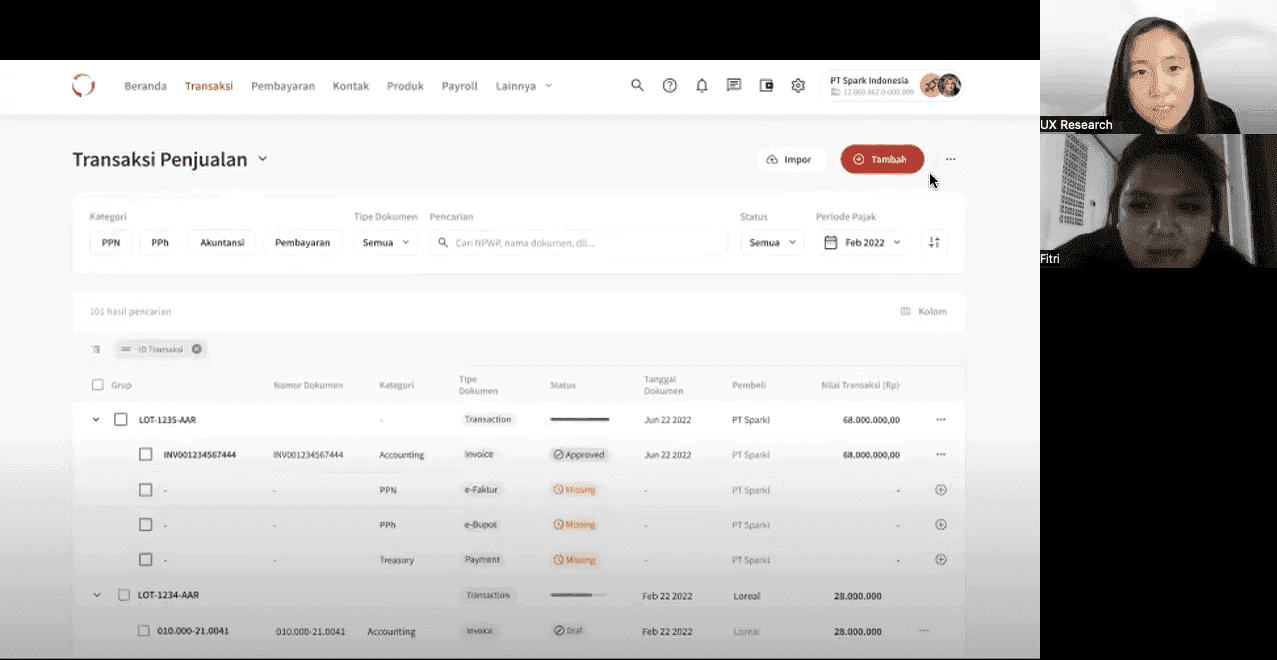
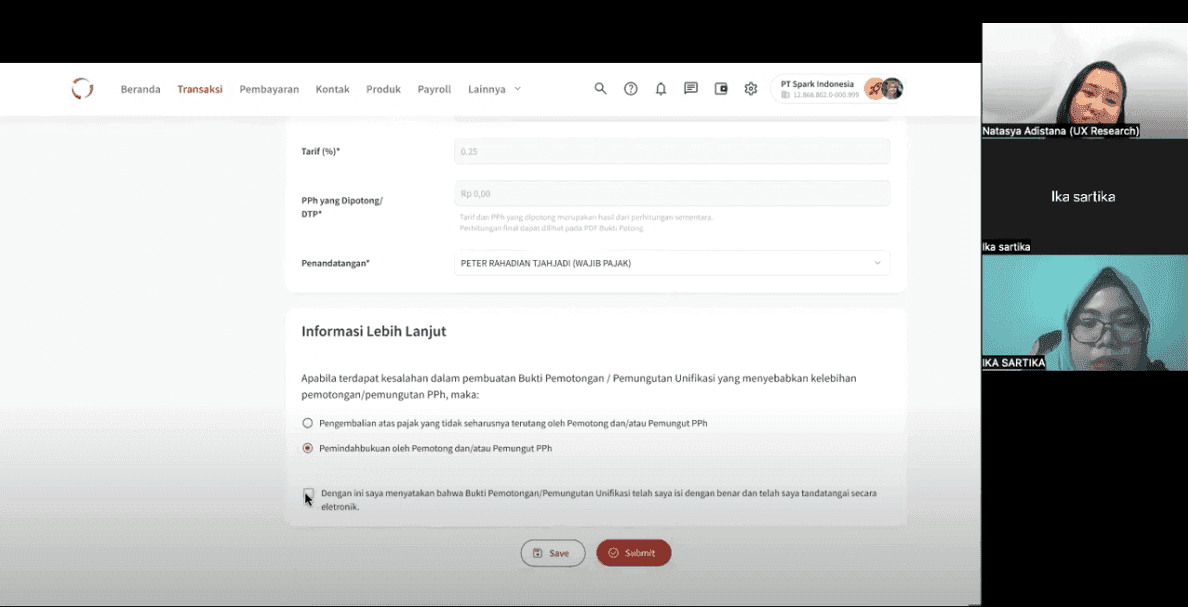

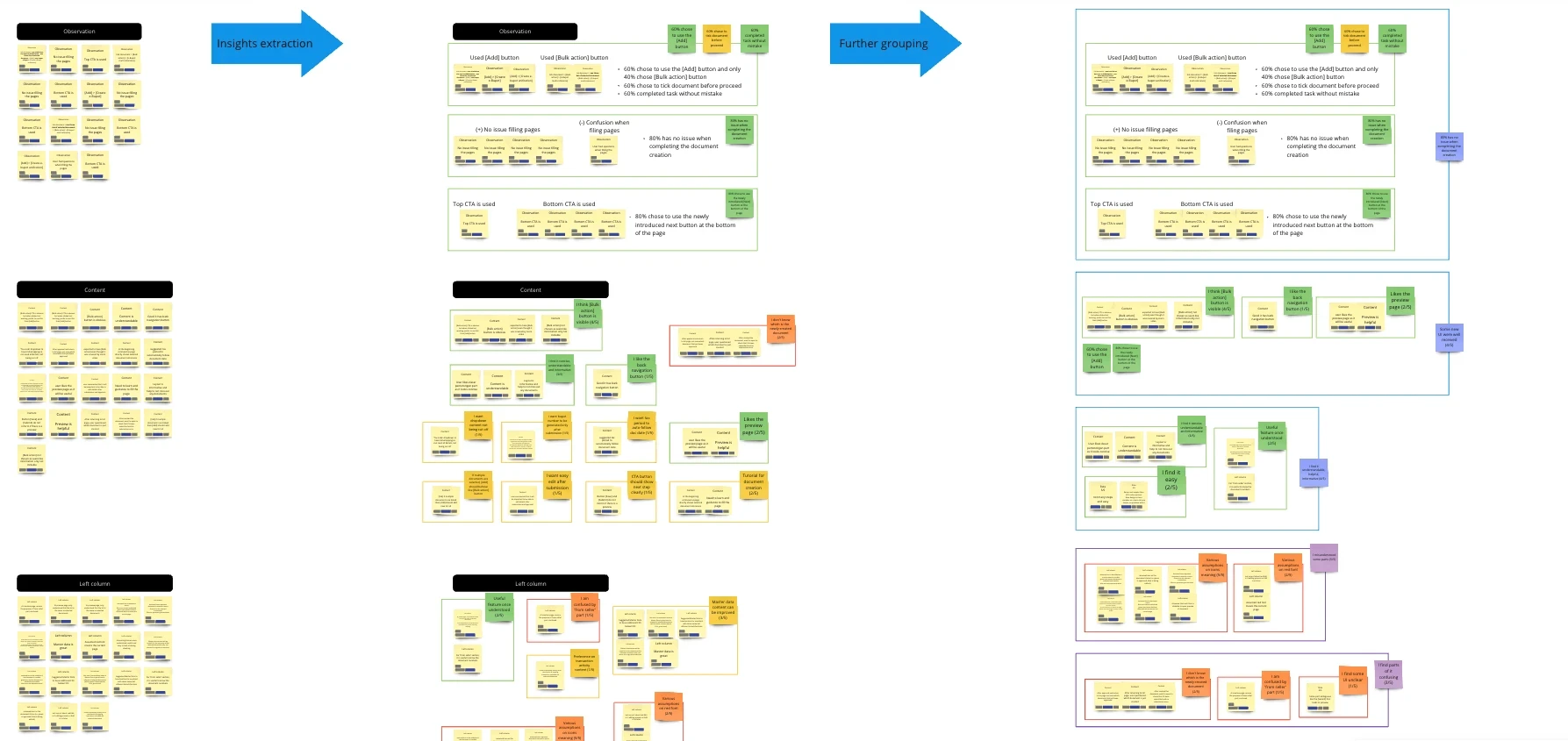
Refining a flurry of research findings into digestible large pointers
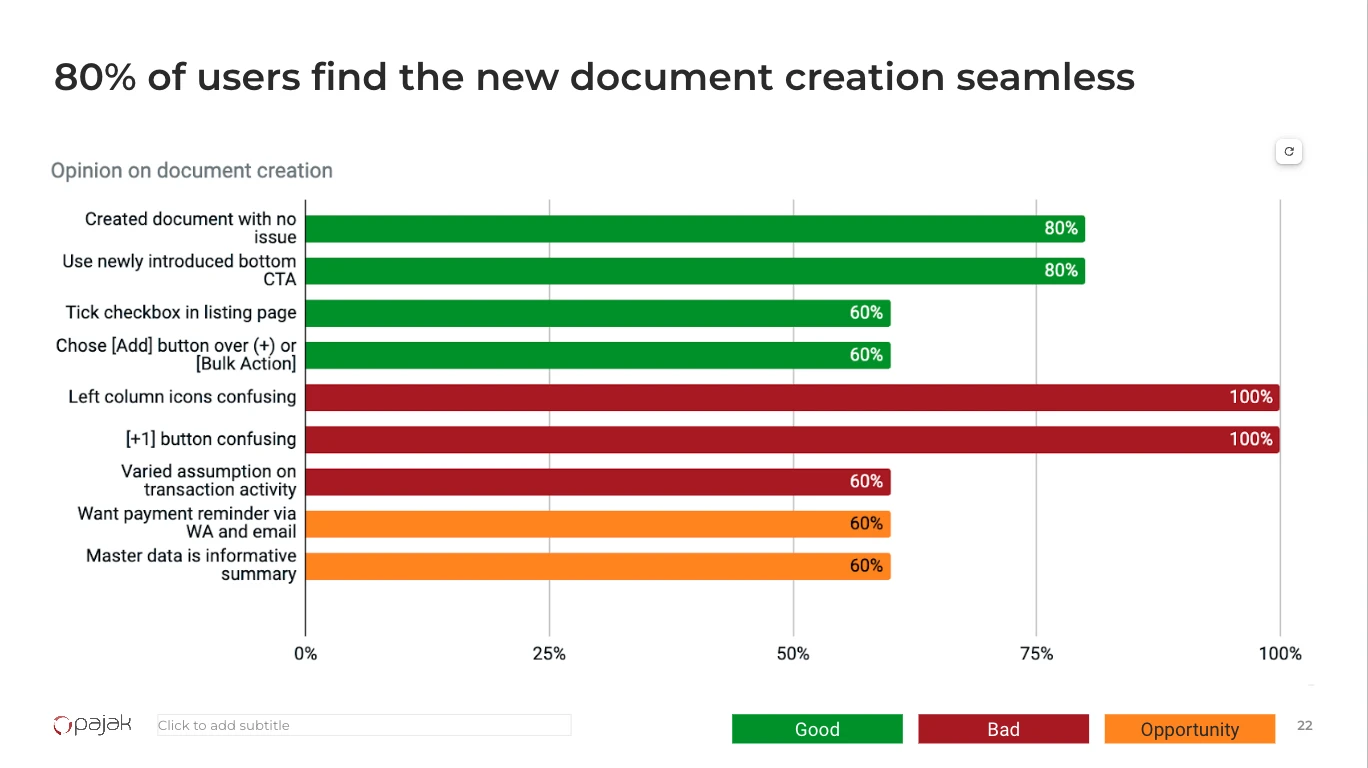
Packaging data into meaningful learnings for stakeholder presentations
Concept testing phase
User personas & journey mapping
With insights gathered from the user interviews, we began mapping user sentiments across the current platform to visualize where frustration, confusion, or delight occurred. This gave us a clear picture of how users actually experienced the product from start to finish. The open-ended feedback we collected also helped refine our user persona archetypes, adding new layers of context around goals, behaviors, and motivations. By grounding our understanding in empathy, we could better anticipate user expectations at every stage of the journey and redesign each touchpoint not only based on feedback, but also on what users needed the platform to be.
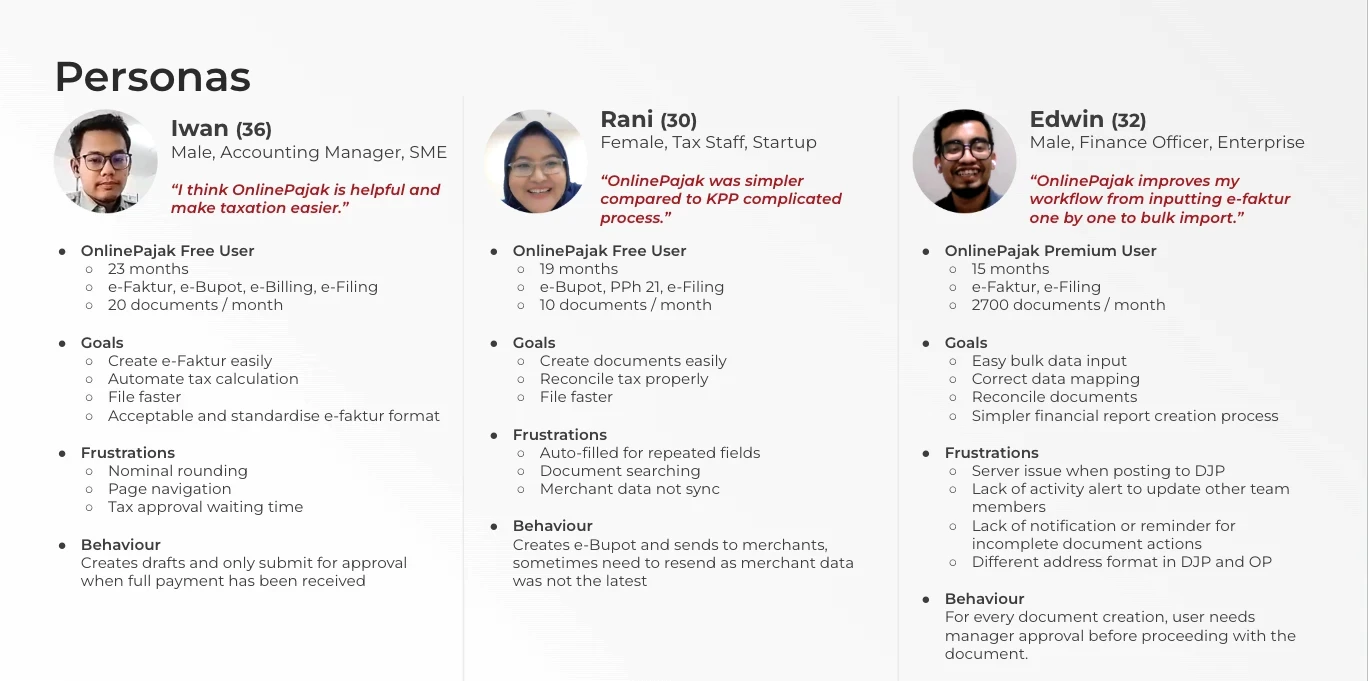
3 main persona types that we were designing for
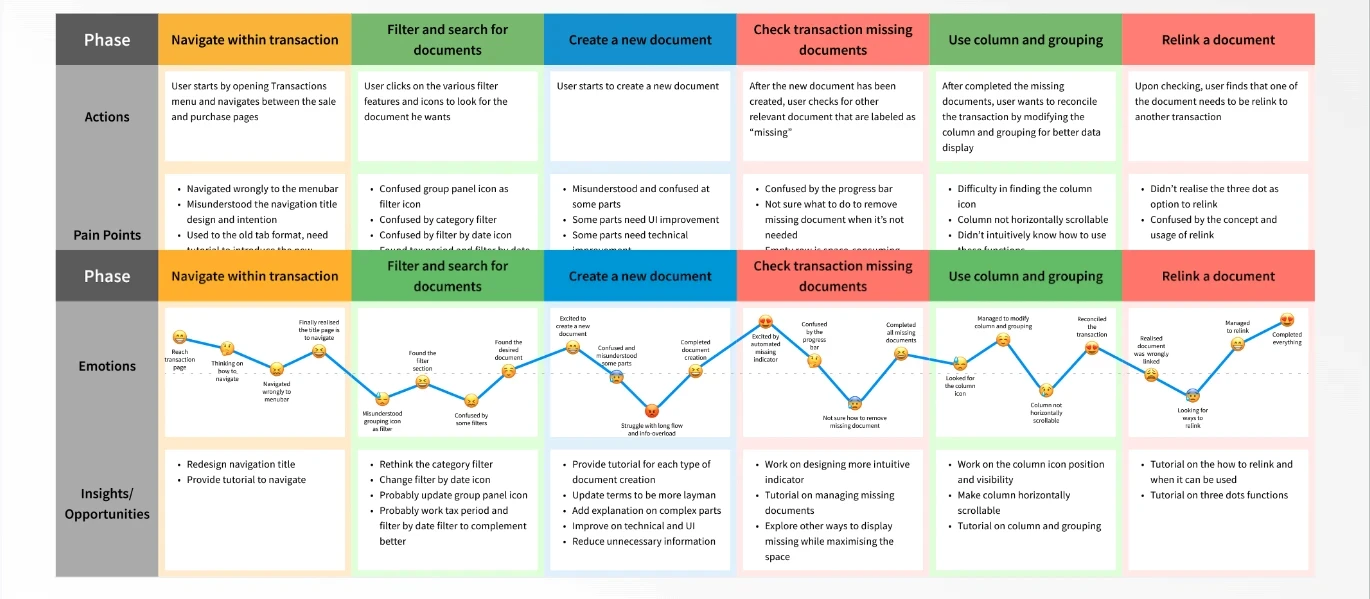
Detailed breakdown of each persona's journey and the emotions they relayed during it
Implementation phase
User stories & design ops
With the Product Owners now equipped with visual guides, they began ramping up user story production to cover edge cases and secondary flows. However, it quickly became clear that the quality and structure of stories varied significantly from one PO to another.
I saw this as an opportunity to strengthen the product function as a whole by aligning all Product Owners on consistent expectations for user story quality and detail. This alignment not only improved collaboration but also accelerated design and development discussions.
Beyond that, I focused on improving our internal design operations. Together with the VP of Design, I introduced a standardized Figma template that displayed the status of each design for smoother handovers between teams. I also created a design-criteria channel to help designers ensure their files met a consistent level of quality before handoff, and a design-team-update channel to track progress, identify blockers, and keep other departments informed of design status.
These initiatives unified the design team, increased transparency, and gave everyone a clearer view of work happening beyond their own verticals.
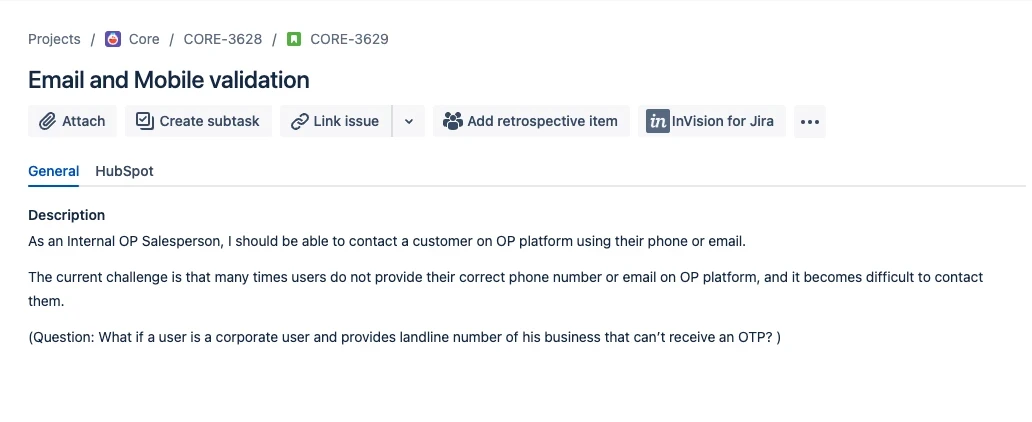
Initial unstructured user stories
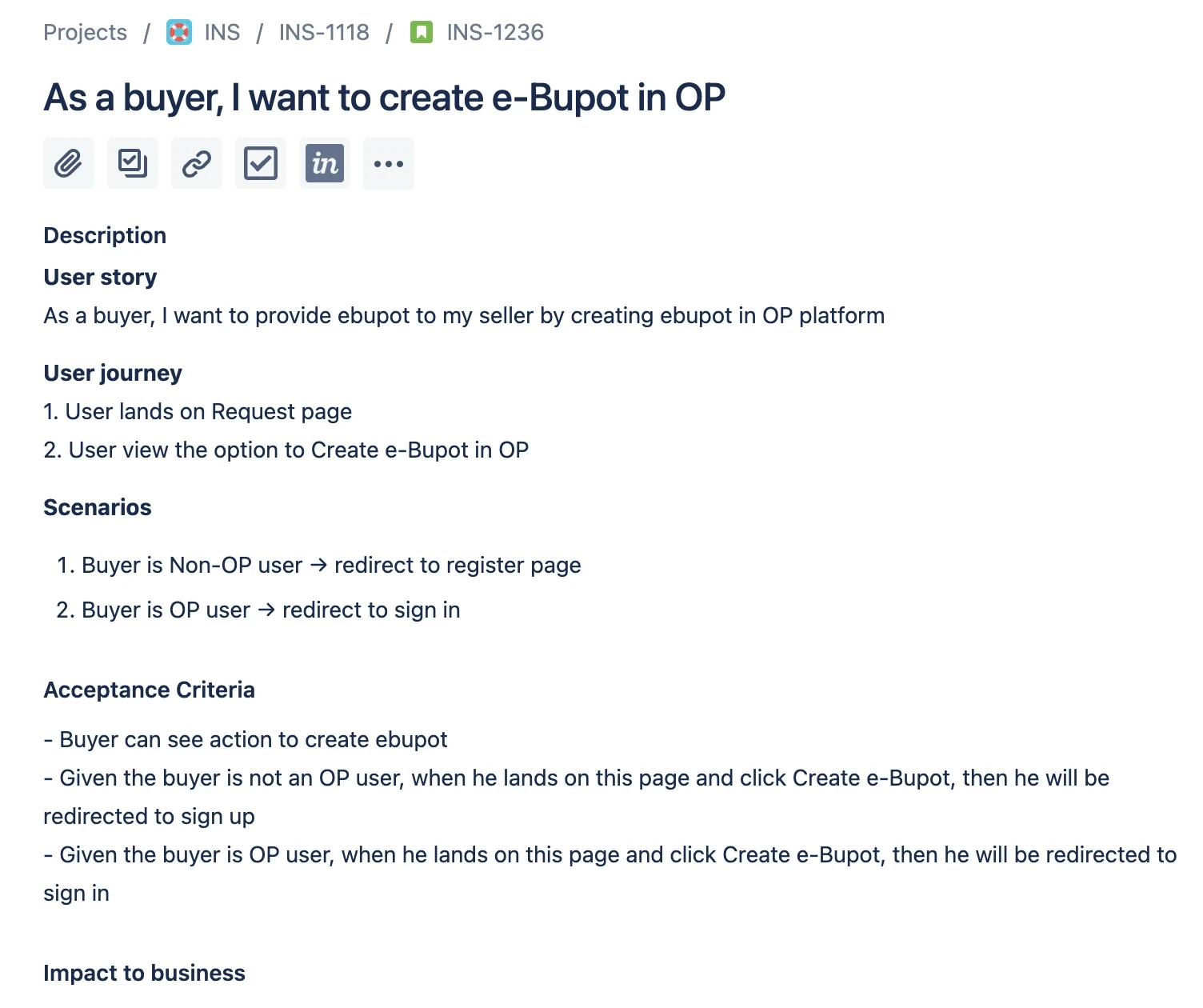
Standardized template of stories I set
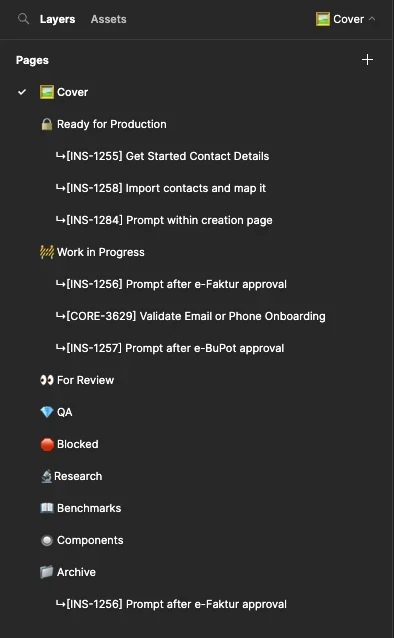
Every design by user story is status coded
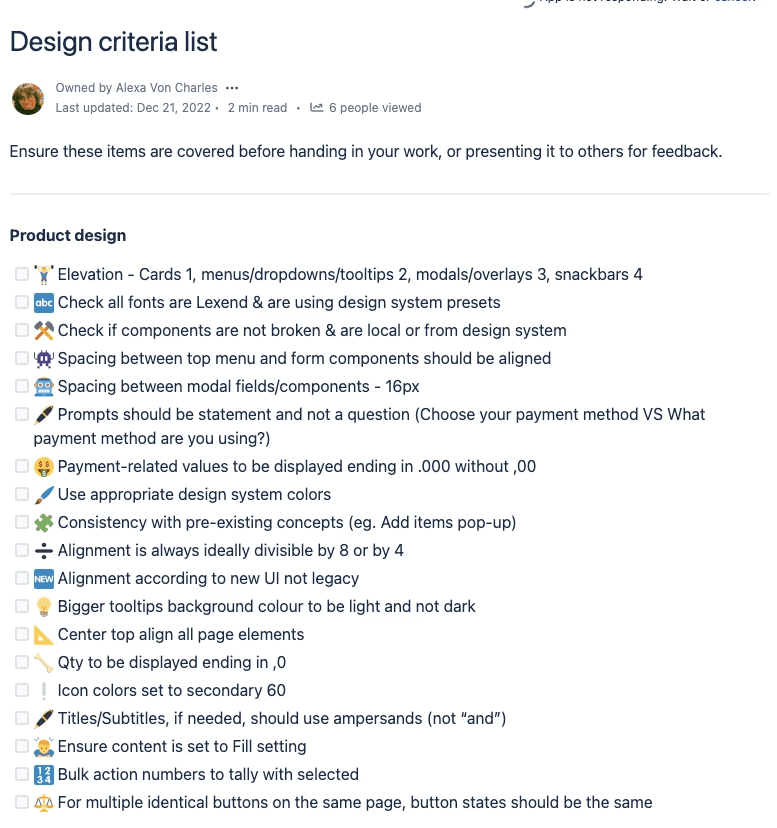
Design criteria list before every handoff
Implementation phase
Analytics & finetuning
Once the new Transactions concept went live in production, the impact caught the attention of stakeholders. I was invited to join an additional team called Activations, where my focus shifted toward driving customer adoption and retention.
This phase pushed me to expand beyond design and research. I began working hands-on with Google Analytics and Posthog, a user session recording platform, to uncover behavioral insights and identify points of friction.
Using this data, we refined the Transactions experience through targeted improvements. One notable outcome was the creation of a Get Started section, featuring interactive tutorials I built with Arcade. These tutorials guided users toward completing key value tasks, helping them build confidence and momentum within the product.
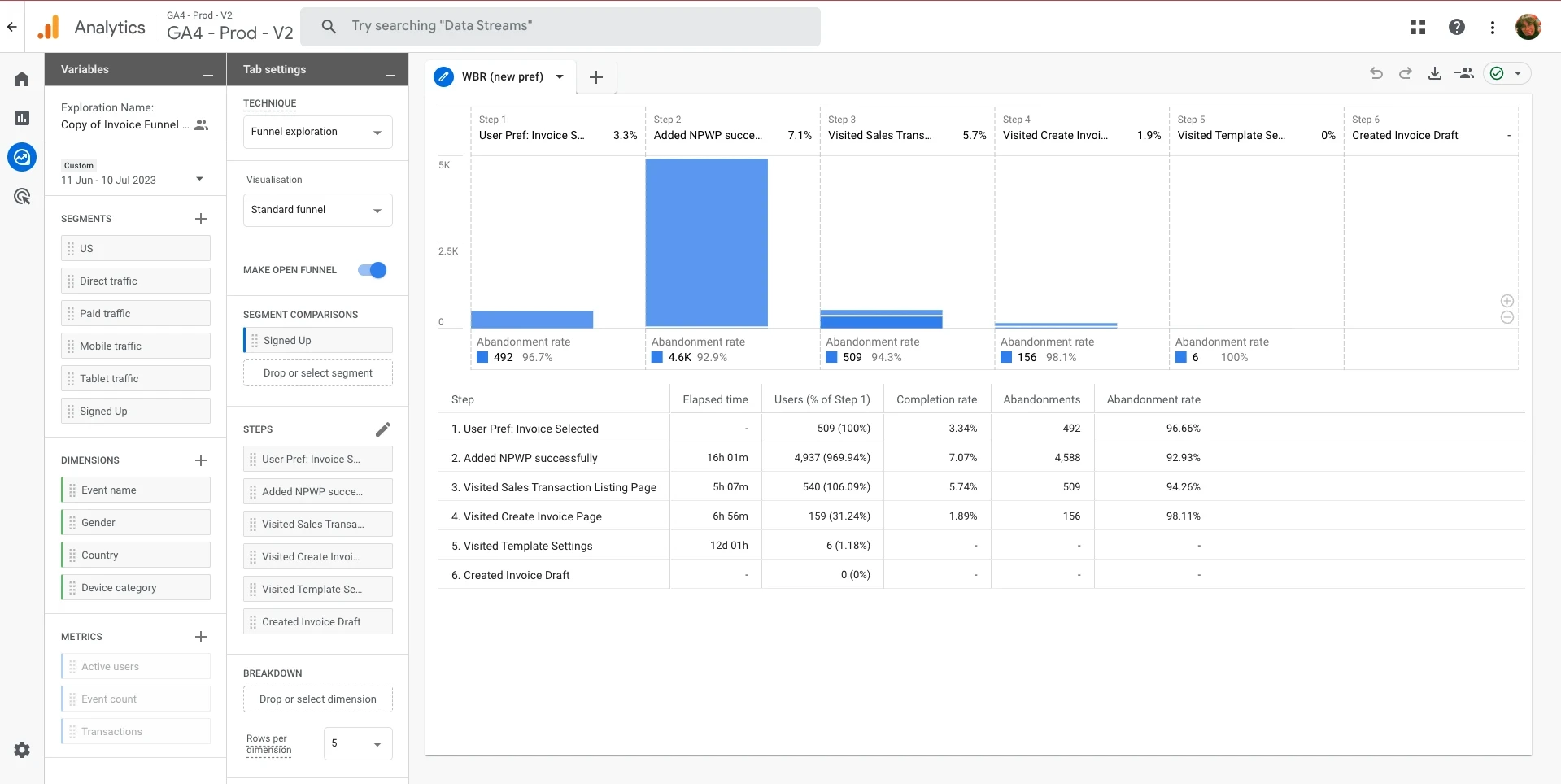
Step by step breakdown of each key journey on Google Analytics
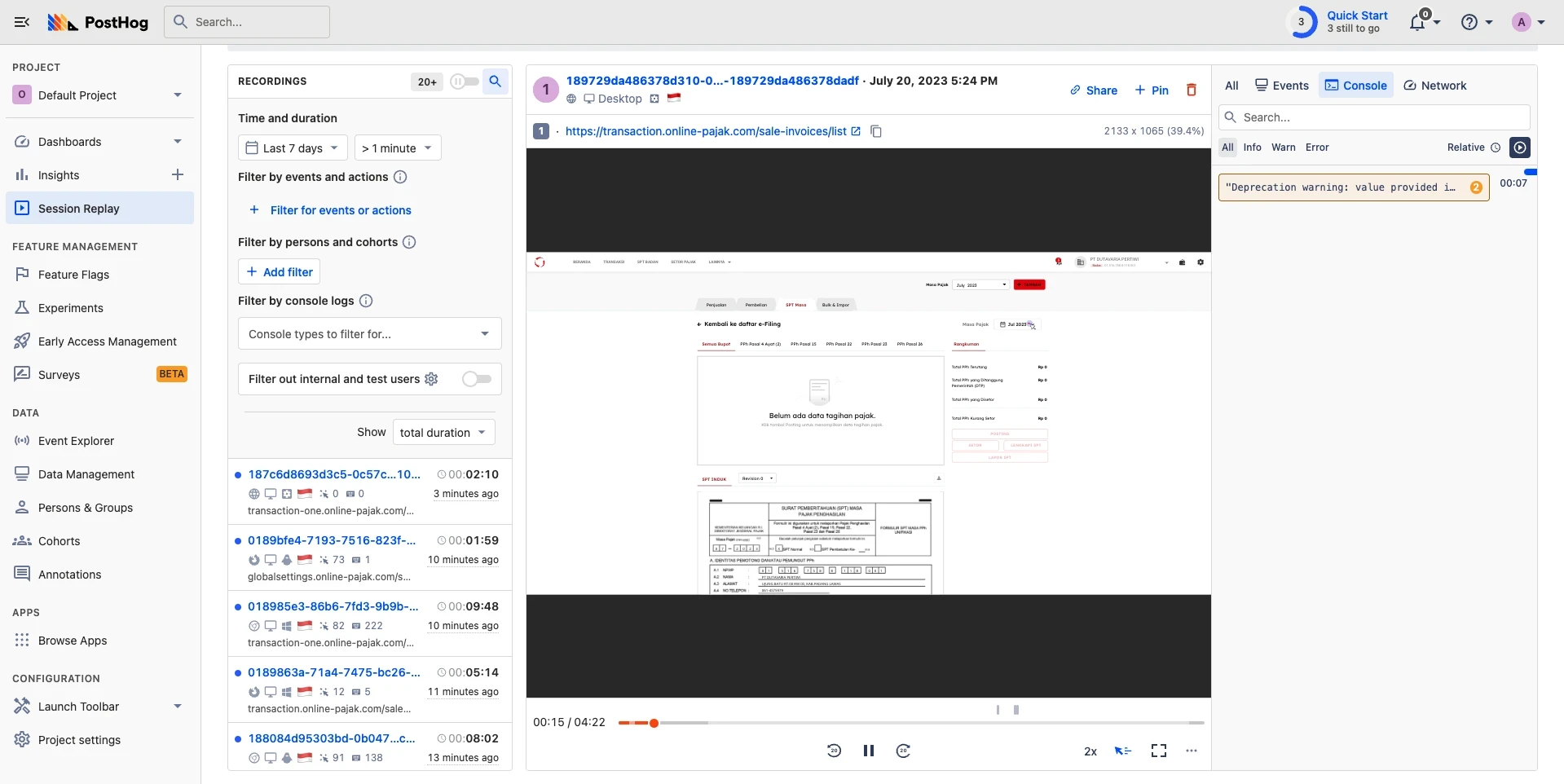
Investigating drop-offs with recorded sessions on Posthog
Step-by-step interactive tutorials suggested to users during drop-offs to help with task completion. All with the magic of Arcade!
The results
The revamped Transactions platform not only boosted adoption but also strengthened user confidence, validating our research-led approach.
120%
Increase in e-Invoice usage
From newly onboarded companies after launching the redesigned Transactions experience.
+1K weekly signups
Driven by interactive tutorials
Tutorials created using Arcade helped guide users to key value tasks and accelerated onboarding.
80% higher CSAT
Improved Satisfaction and Confidence
Users reported smoother reconciliation of documents and greater overall satisfaction with the platform.
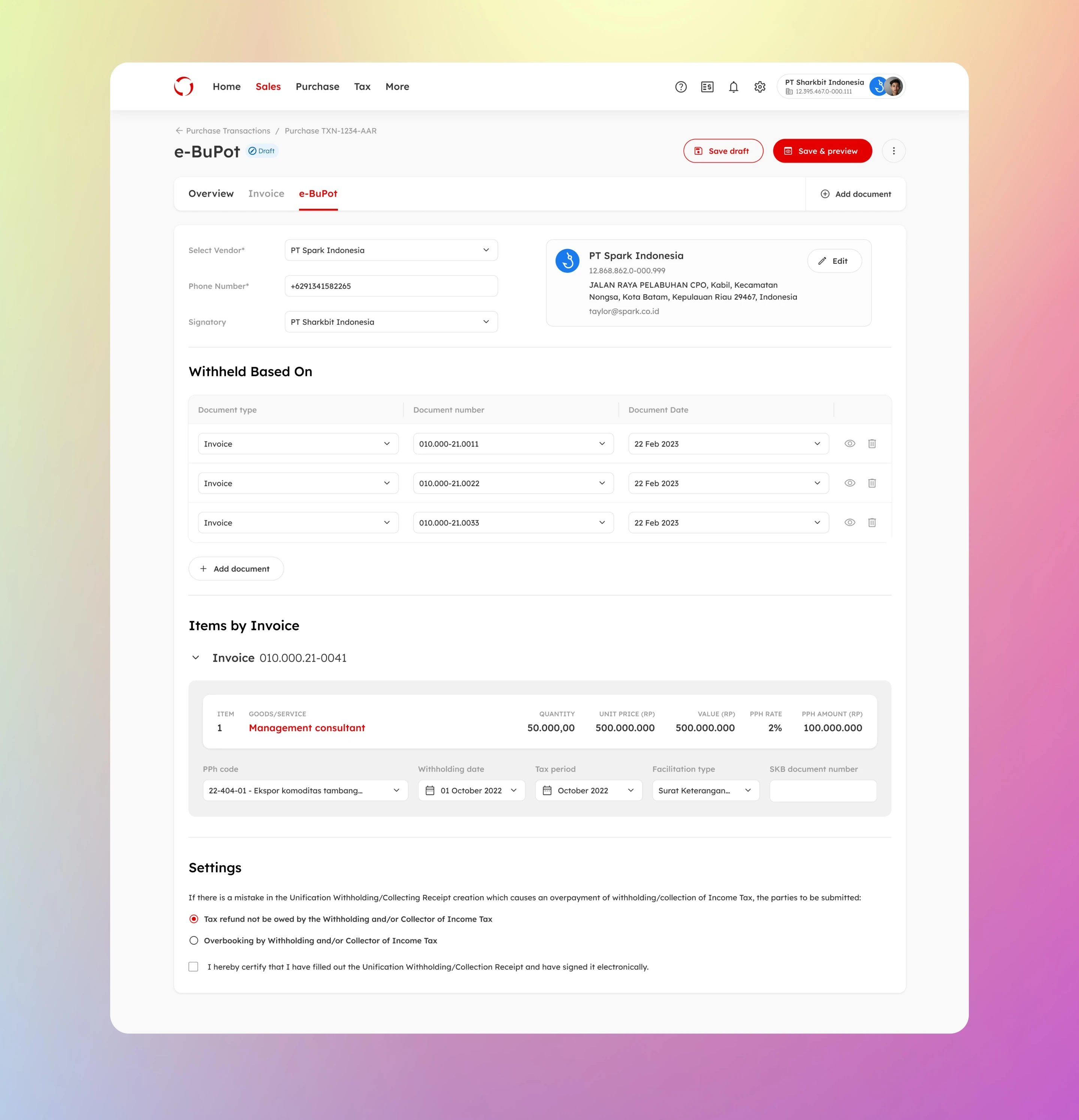
Auto-filled accompanying documents once Invoice is filled. Fill once, fill all.
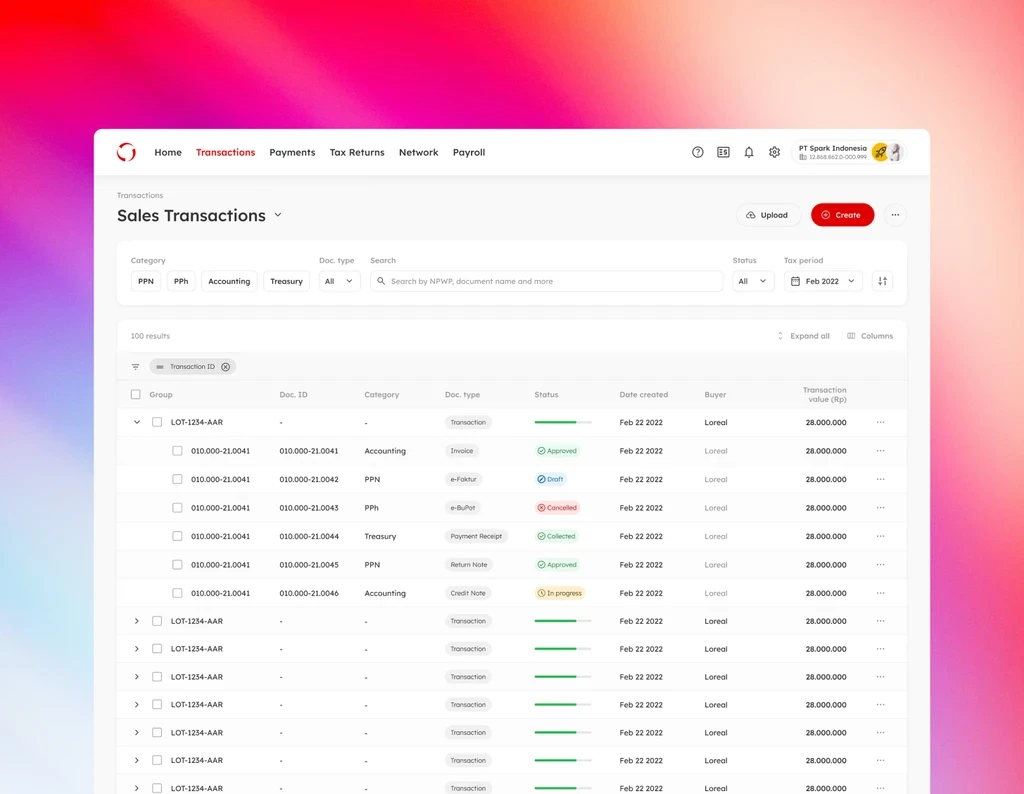
Clean, folder-structured transactions with status visibility at all times.
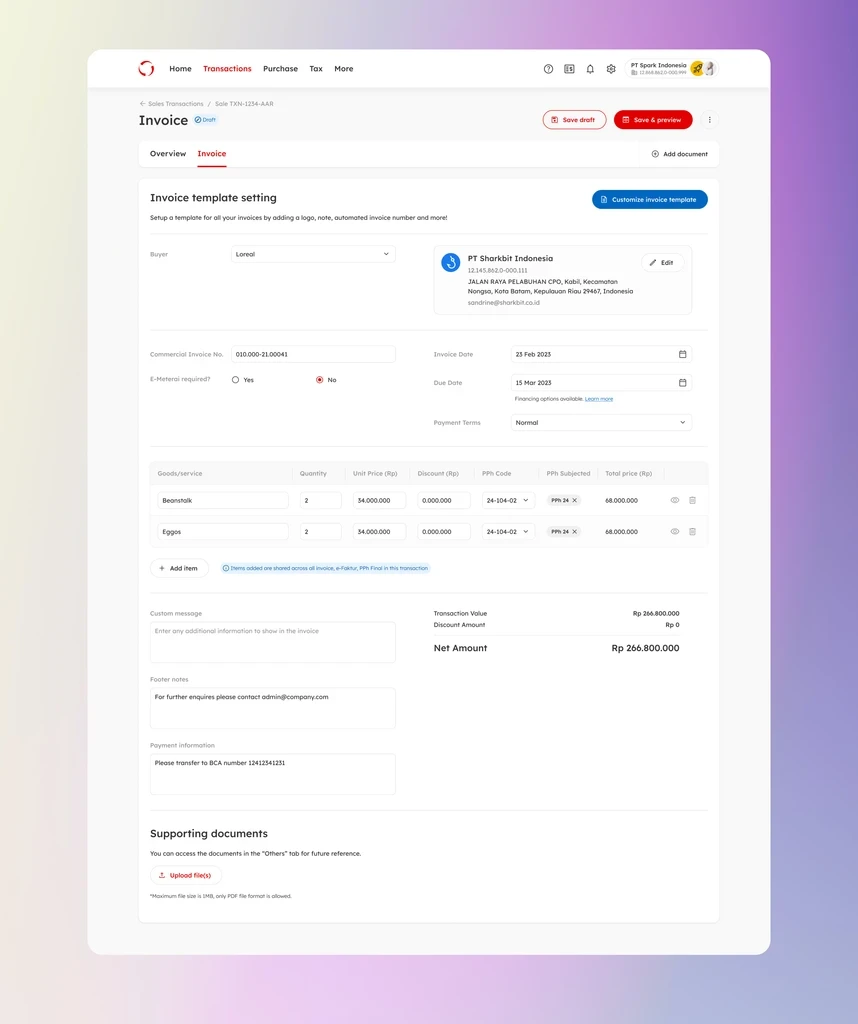
Template based invoice fill-up according to preferences of each client.