SHIPPED
PropertyGuru Monetization
Driving ad product upsell in core journeys to maximize agent adoption and spend.
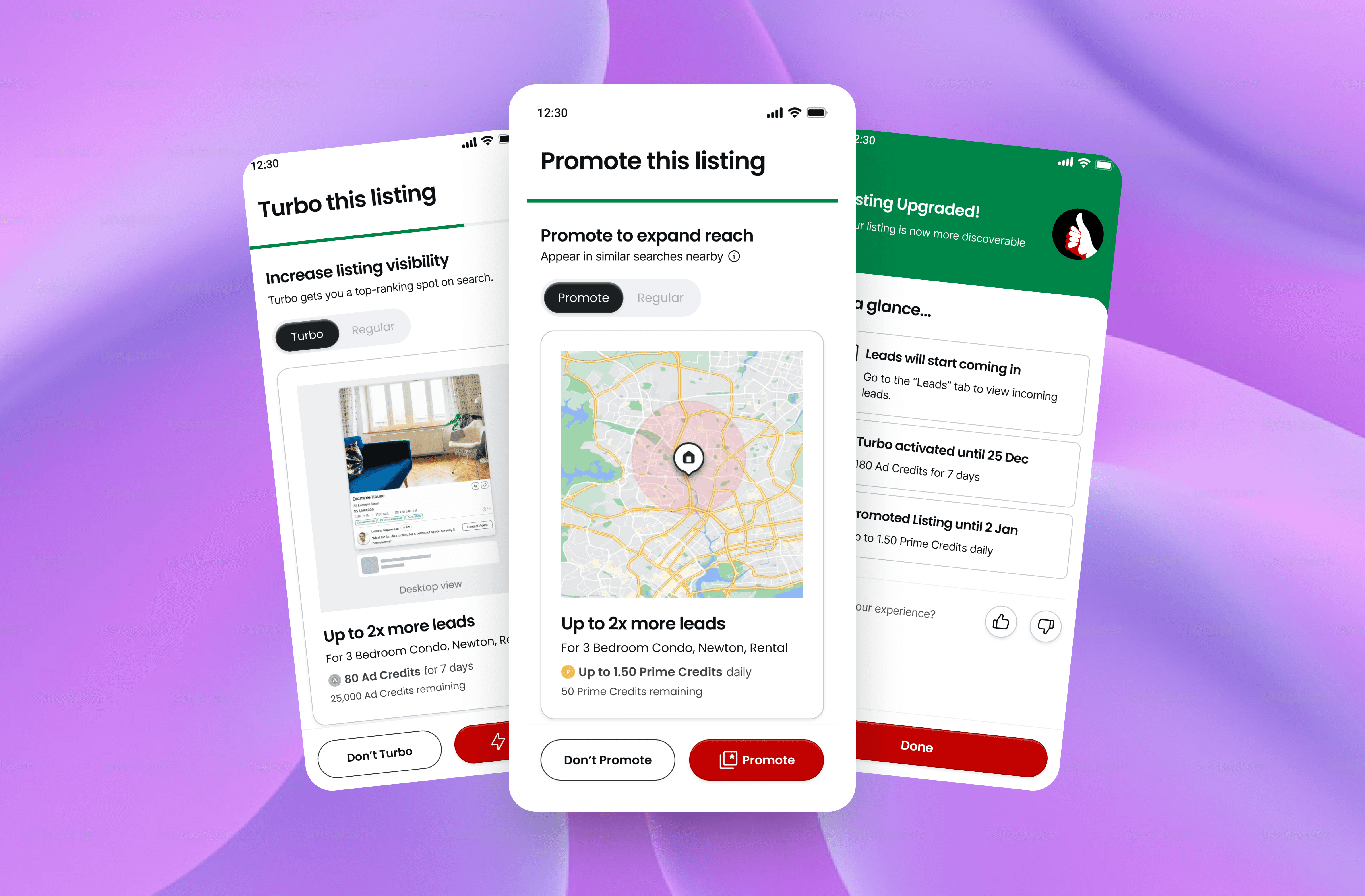
PropertyGuru is Southeast Asia’s leading PropTech platform, connecting 31M+ property seekers with 50K+ agents each month across the region. While agents compete heavily for visibility, adoption of paid listing upgrades remained low. I set out to understand why and how we could drive stronger uptake.
Skills
Experience design Leadership Design ops UX research
Role
Lead Product Designer
Timeline
3 months
Company
PropertyGuru Group
The challenge
“How do we convince agents to uptake or spend on ad products, especially when their intents are at the highest?”

Bibaswan Banerjee, Director of Agent Products
The process
The moment I received the brief, I knew that this was going to be a "down-and-dirty" project that had one main aim: Make more money.
So the numbers and metrics really mattered here, and the underlying crux of it was to understand why users were behaving the way they did - and find creative ways to engineer that.
Given that my preceding projects had some patterns in within the design system, and my UX researcher was out on leave, this was pretty much a tag team effort from my senior product designer and myself. I had to come in clutch with my UX research background to take on the research side of things as well.
As with the other projects in PropertyGuru, we broke this down to 3 main stages: Understanding, Experimenting, and Iterating.
Understanding phase
User journey
As designers, we wanted to get a high-level understanding of the current user journey, cross-corroborated with previous research sentiments. From there, the game plan was to prioritise the most painful points and design accordingly so as to make the most impact in the journey.
Understanding phase
Heuristic evaluation
Before getting introduced to the project, I already had some observations in mind from my newbie analysis of the product. This gave me an unbiased view (the agents' view) without the shades of business needs or tech constraint clouding my vision. These were our main observations: 1. There were too many ad product terms - and external users would be too confused about what they do to spend money on them. 2. Agents were already paying a pretty penny for subscriptions, they would be reluctant to spend further if they aren't able to see what benefit they might get from that spend. 3. If not all thrown at once on a page, ad product upselling was done as one pop-up after another - really frustrating to deal with. 4. At the last stage of posting a listing, the entire mobile screen is taken up by listing quality score and upselling for products such as Boost appears as a simple line item at the bottom of the page. This signalled a severe lack of visibility and awareness of the product/feature.
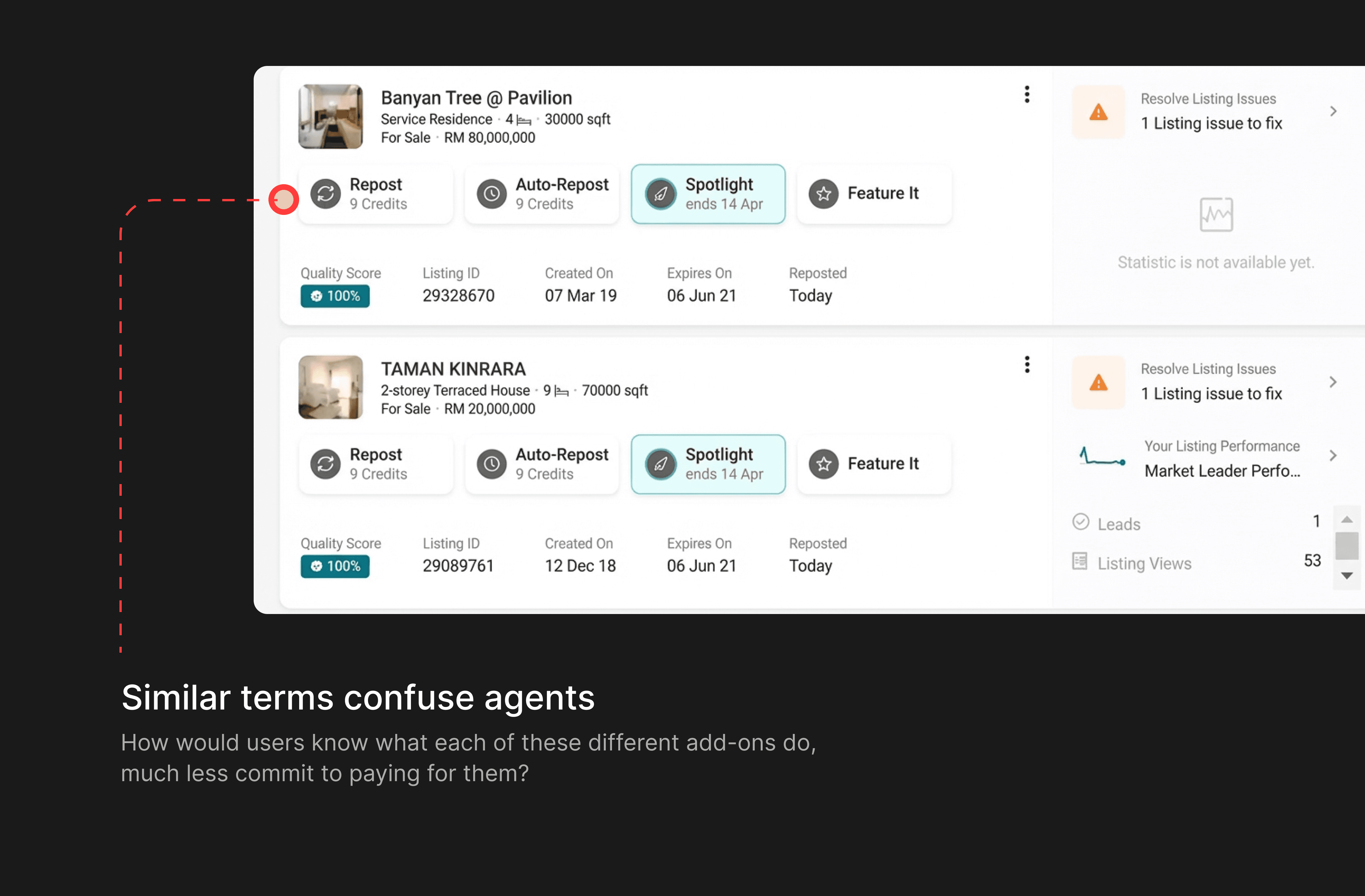
A preview of agents' desktop listing view on their dashboards.
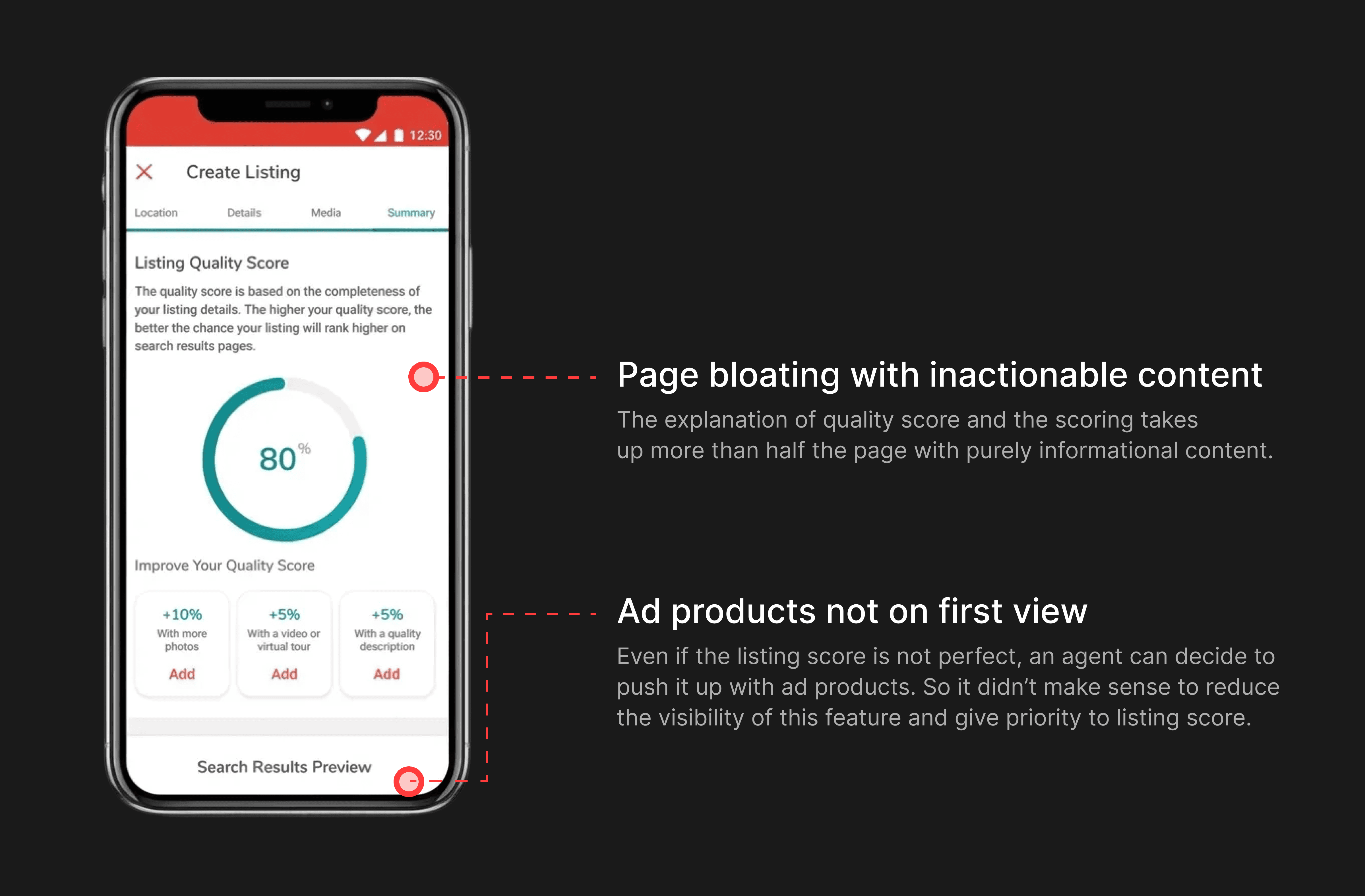
Mobile experience for agents right after they post a listing.
Understanding phase
Existing data & benchmarking
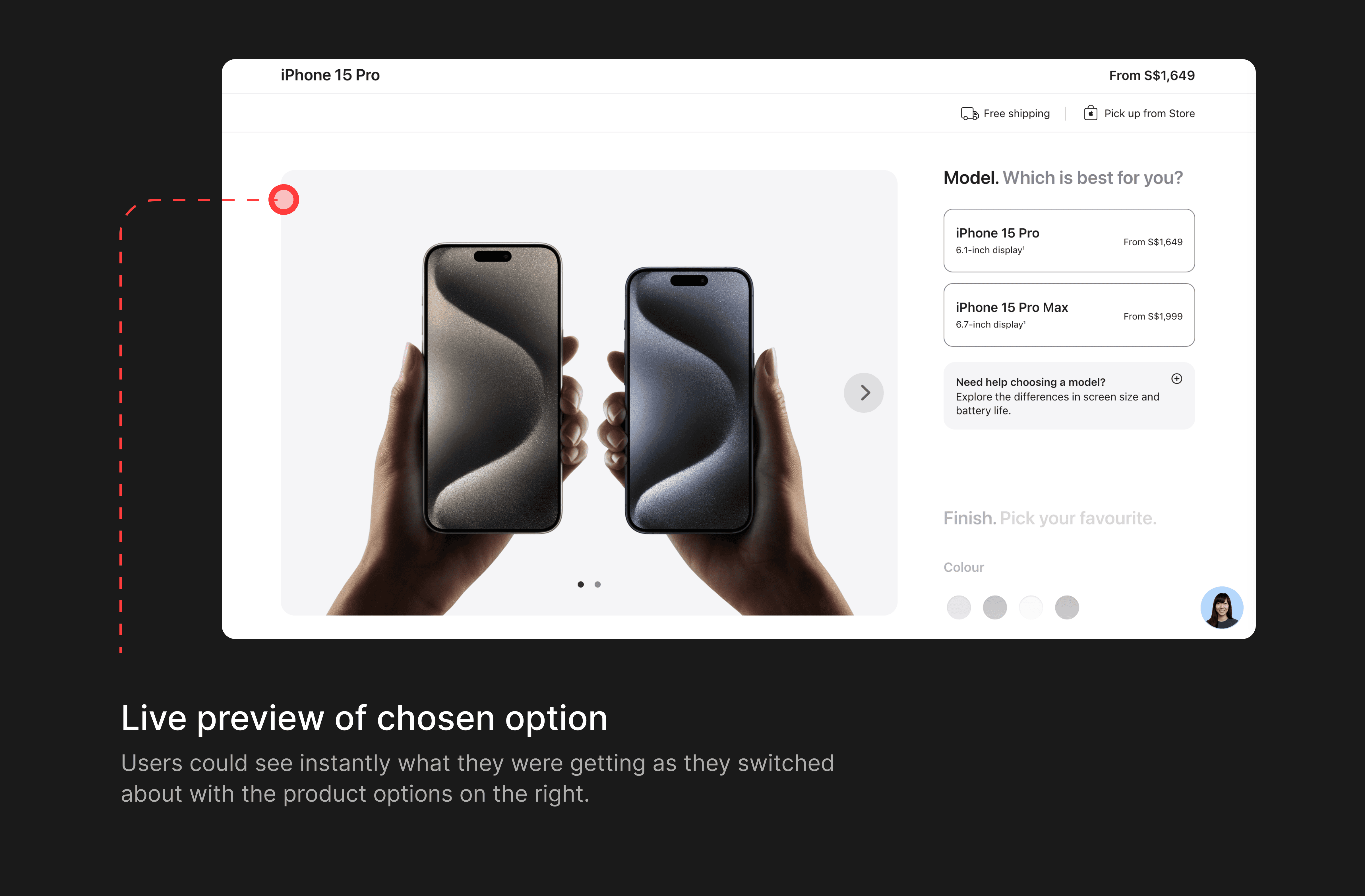
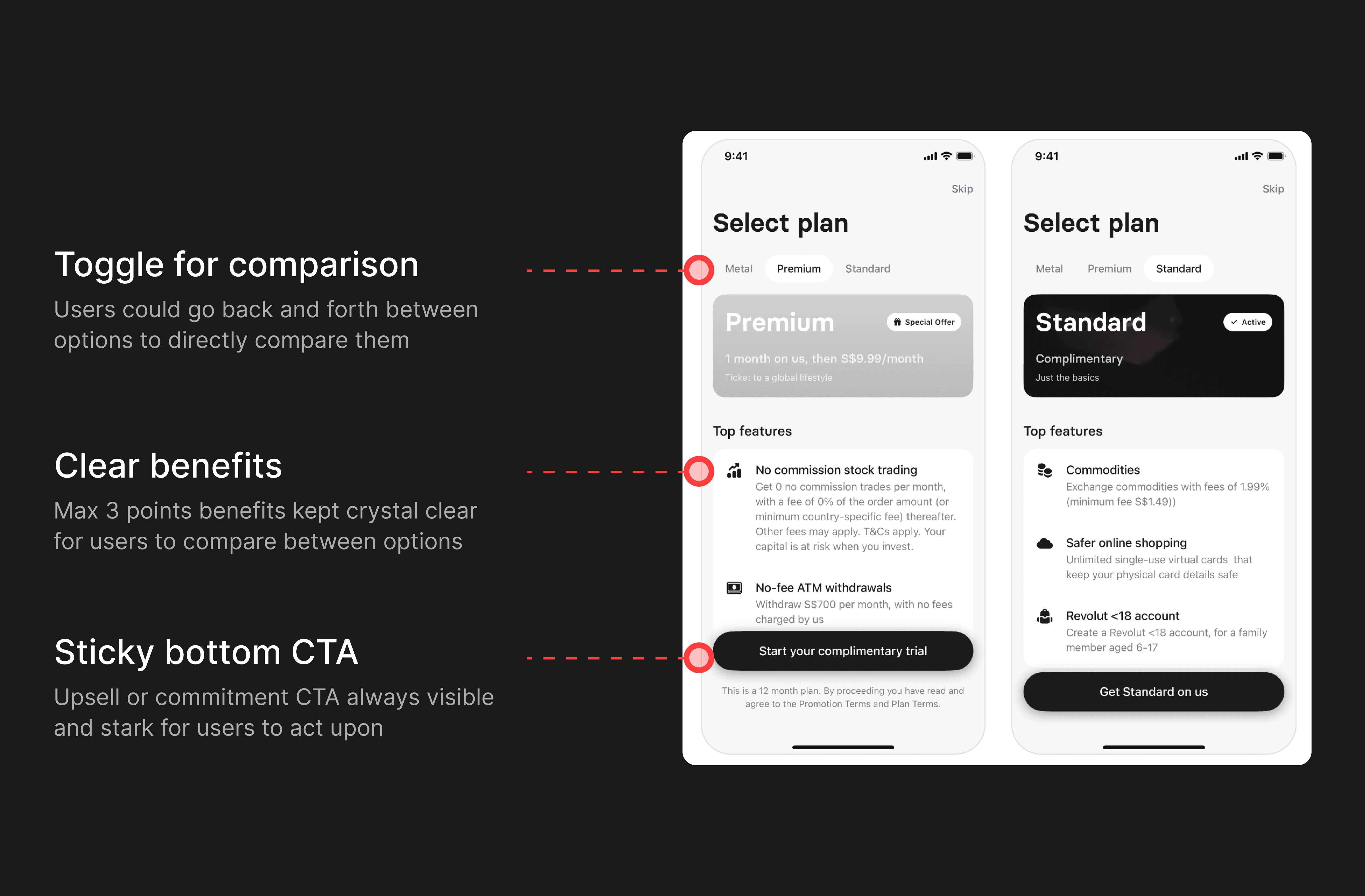
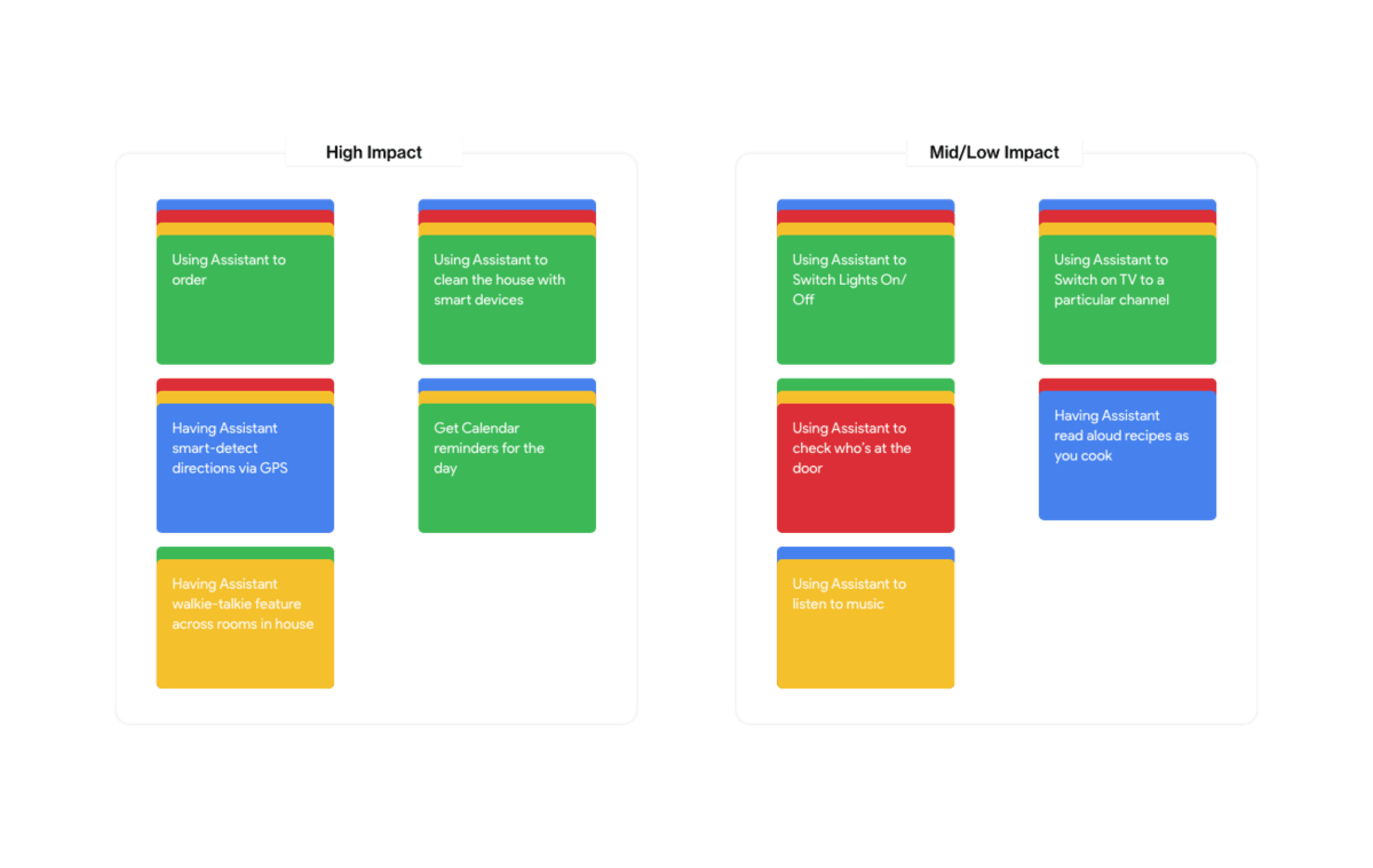
Next, I asked my senior product designer to review past research. While primary research validated some assumptions, we also explored peripheral insights to uncover blind spots. This revealed broader confusion across the agent platform — particularly a lack of clear success feedback when an ad was purchased, both during listing creation and within listing management. These findings aligned with our drop-off patterns and heatmap data, reinforcing early observations around user hesitation. To deepen our understanding, we looked outward for inspiration. We created a Figma board to study how other products successfully encourage users to take that final step, drawing inspiration primarily from Apple and Revolut.
Project goals
Find new revenue channel
With respect to the business, find a way to increase baseline credit consumption through ad product spending.
Increase agent understanding of ad products
People spend on what they are convinced to purchase. First step of that is to understand what they're getting from that product. Reduce reliance on FAQs and customer service for this.
Simplify & beautify
Reduce the overwhelming nature of the previous information dump, and give control back to the user through means of simplistic self-explanatory design.
Experimentation phase
Variations & wireframing
We took a step back and went to the root intent of the user. What did they want to achieve after creating a listing? They wanted more views than just posting alone. Wait a minute. We started seeing some similarities to cross-social listings and even food delivery apps. We got our thinking on and decided to experiment with a whole other simplistic route. Sometimes exploring beyond your first cut brings about new ideas. Other times, after reviewing with others, it just makes you more confident of your first draft. After reviewing with the Head of Design & other design folks, we found our initial version to have resonated better with driving the "what's in it for me" across.
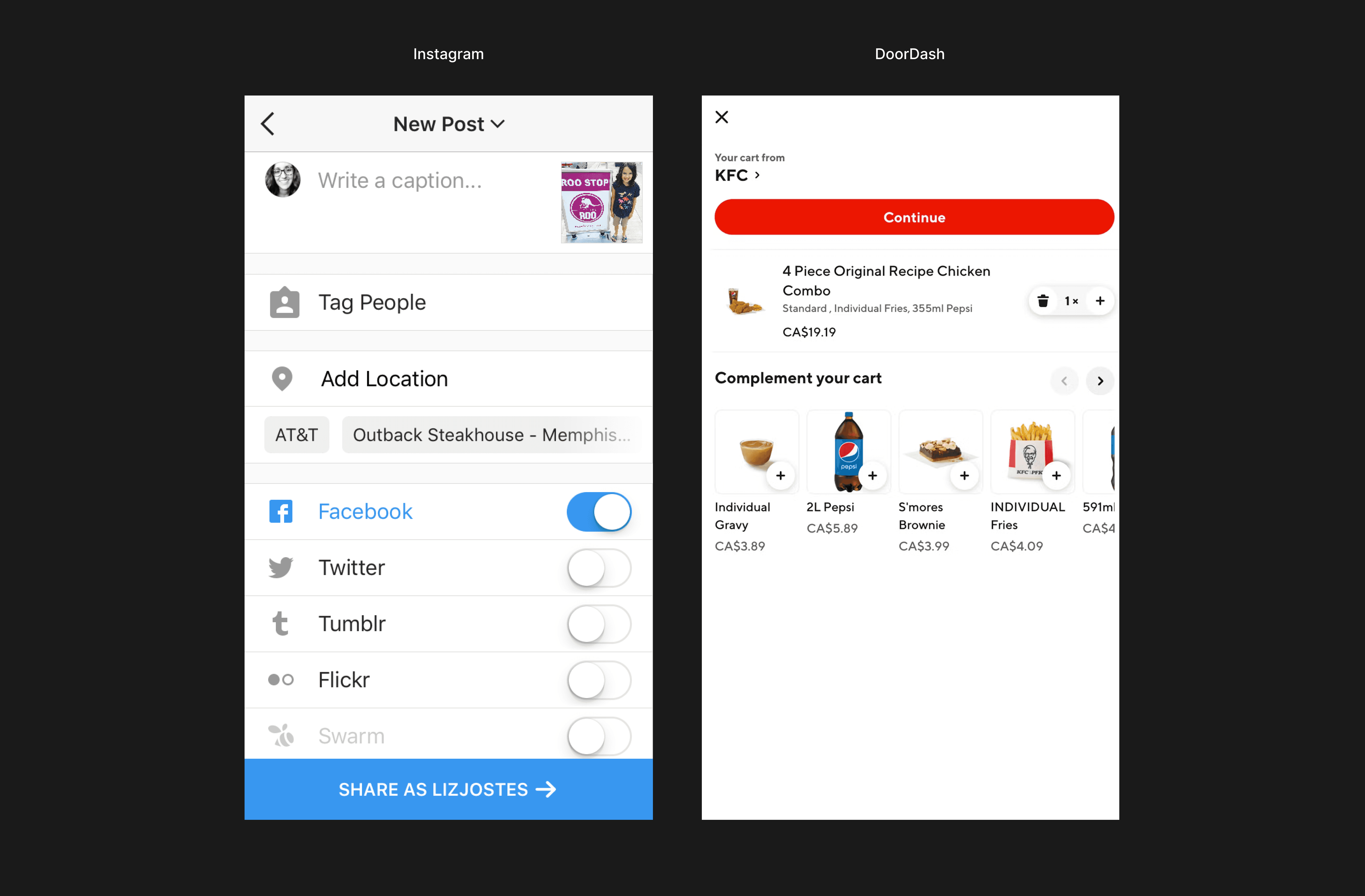
Instagram with the ability to add-on other platforms before posting. DoorDash with the ability to add on more porducts right before submitting an order.
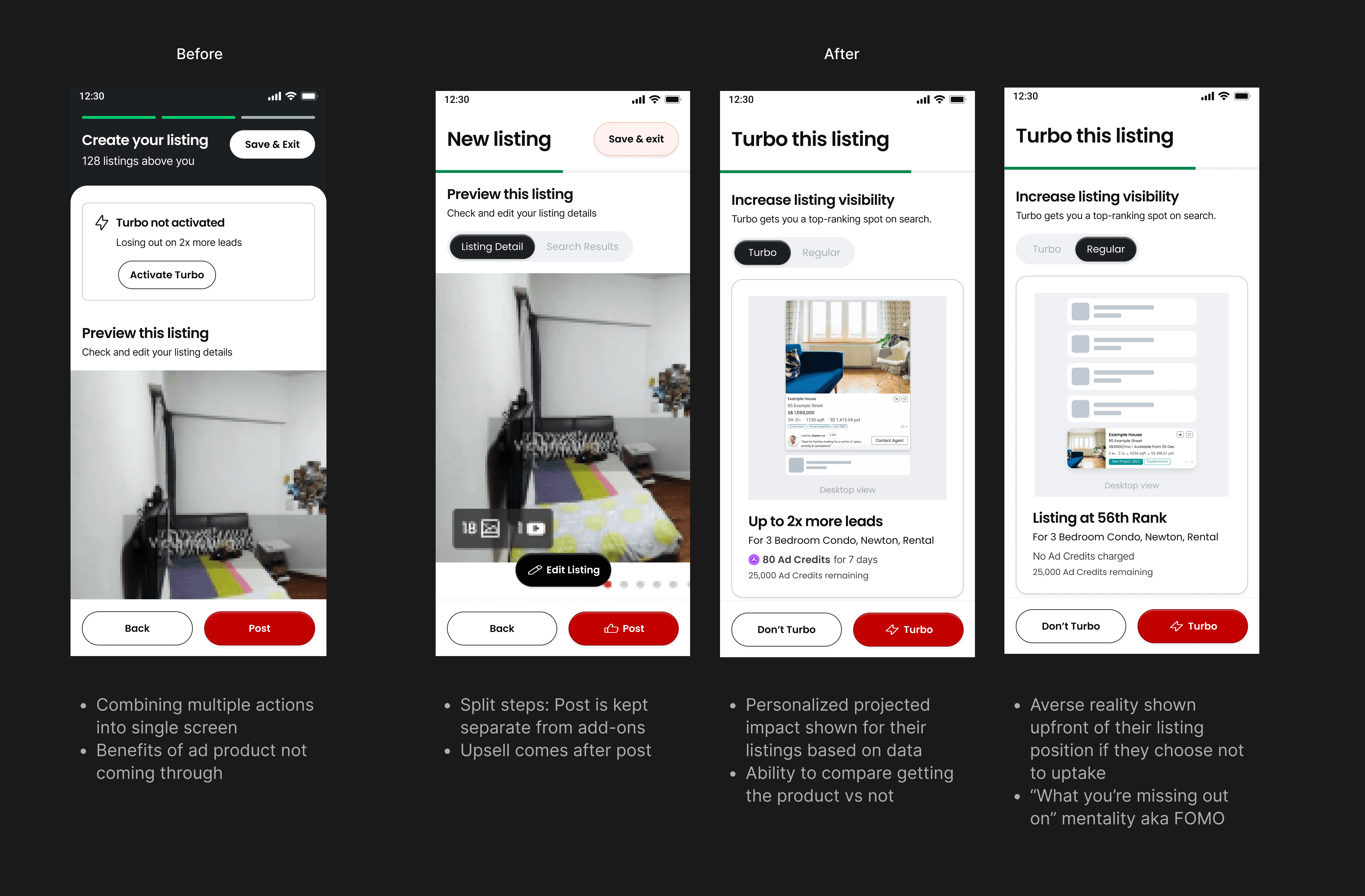
Following the same idea of add-ons before posting was too complicated for us. We decided to take control of focus with a singular decision per page.
Experimentation phase
The new journey
With a clearer direction now, it was easier to visualise the full journey. A major improvement was the reduction of back and forth for the vague understanding of the product - as well, the lack of hesitance to pull out of a previous purchase by contacting a customer service agent. The biggest bonus here was getting users to commit to posting a listing sooner - this indirectly would reduce drop offs as well.
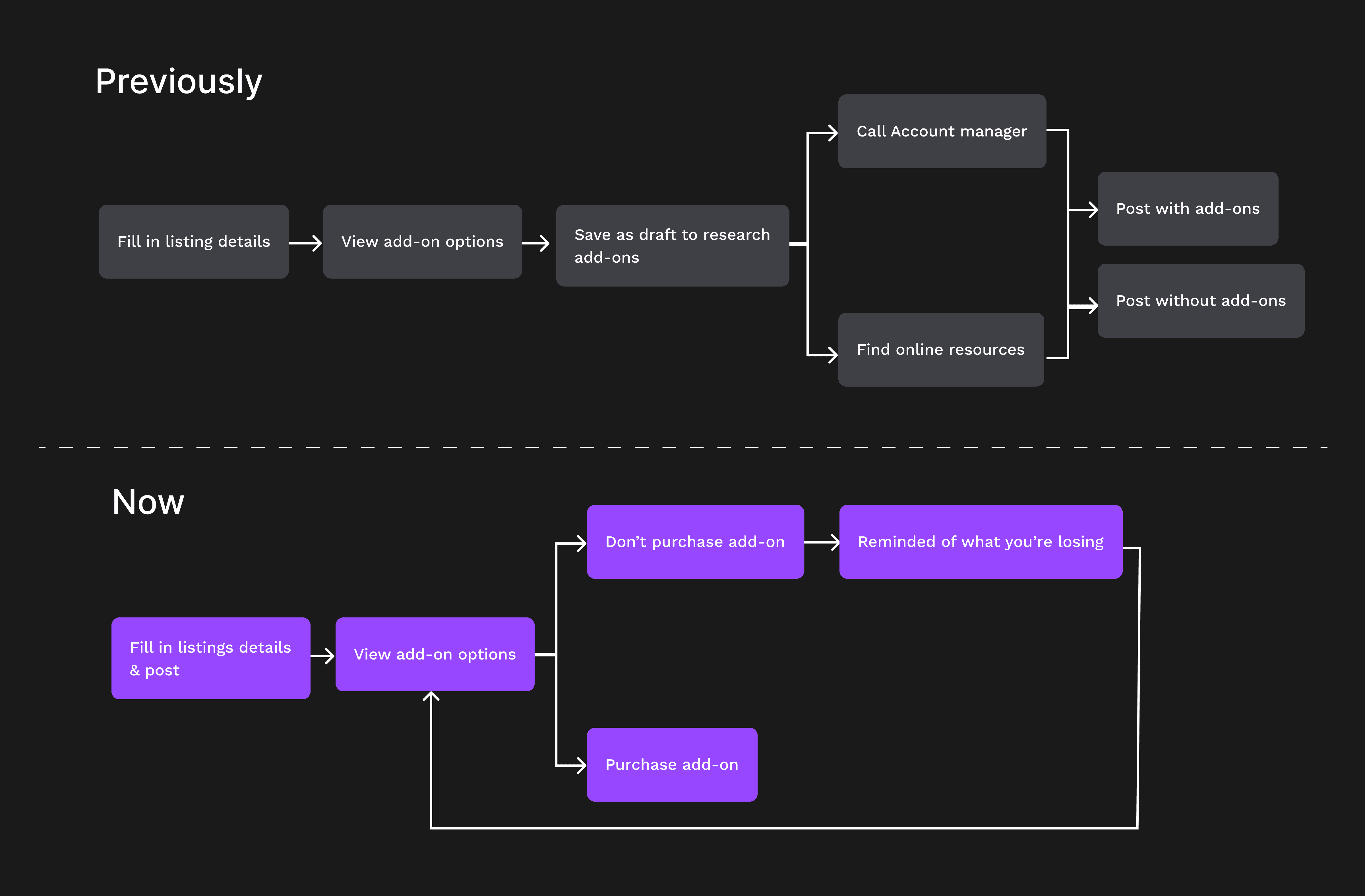
Comparison between previous user journey vs the proposed one for ad product reception.
Iteration phase
Prototypes
It was time to hunker down and create the full prototypes and variations to be tested out with our sales agents. In the end, it was an A/B test between the design we were most confident with and the existing flow. We took the time to really finesse both the desktop and mobile variations between product and design to land at an optimised version that we were comfortable with.

Mobile prototype of the upsell experience
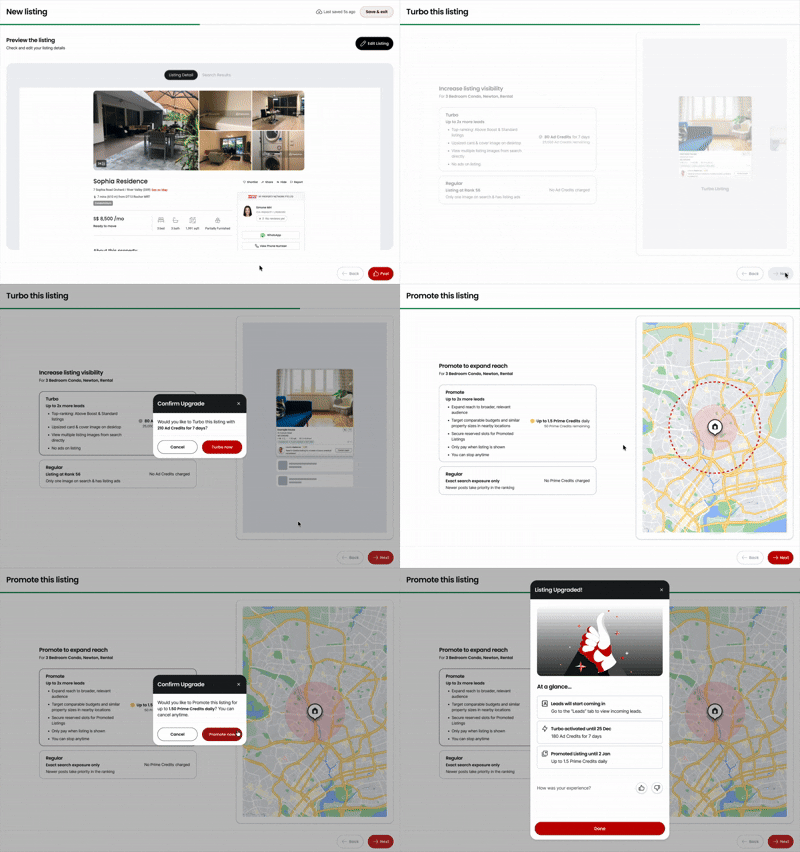
Desktop prototype of the upsell experience
Iteration phase
User interviews & results
Here's where we hit a roadblock.
A minor one, but still.
My researcher had to be away unexpectedly for a week and this meant me having to stand-in, despite my tight schedule.
I had to make a call to perform a focus group study with 10 sales agents instead of 1:1 sessions. Given my psychology background, I was well aware that Asch's conformity bias would stand in. In other words, just because majority of people in the room chose one option, it would make those who have yet to answer more obliged to lean in with the consensus.
The other issue was the inability to find actual property agents, and instead use our sales folks as pseudo agents. The clear bias here is that our sales folks may be more inclined to sell, sell, sell, when our users would be wanting the opposite.
While I couldn't solve both of the problems above, I tried creative ways to control the first problem. Before questions were asked, I asked the participants to write down their answers quietly on a piece of paper before presenting it. Yes, Survivor style.
In the end, it was a unanimous vote for the proposed new version. Some noteworthy comments were on some minor copy tweaks to make the result of upselling more relevant to the user. Others as well, to reassure users of actions they have made.
Implementation phase
New ways of working
As a design lead, the work doesn't end at coming up with great design. I had to see things through such that the end-product was as pixel perfect as what we intended it to be.
To do so, I crafted this entire project in phases according to my self-made Ways of Working built on my previous experiences. The process is shown in detail below - but if you're really nerdy, you can explore more here.
I championed this across each department, be it tech, sales, product, design or even marketing. However, the most impactful of this was the design QA portion that allowed us to identify real-device experience issue that would have otherwise passed by developers and QAs.
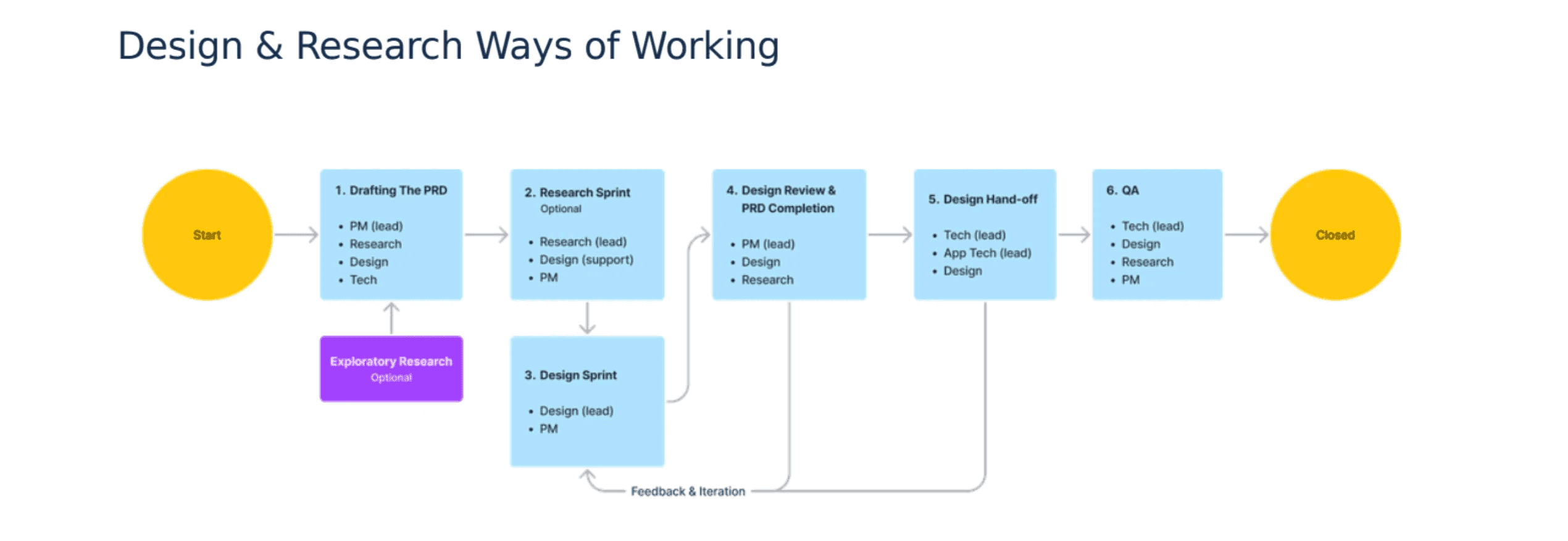
Pioneering and setting a global ways of working for PropertyGuru as a Product team
Implementation phase
Instilling accountability
What makes designers take ownership over the work they churn out? Engage and assign them to the metrics of the products they ship.
I set up a weekly meet where my designers come together to update the team in the below format:
What was shipped
When was it shipped
How is it doing
What is causing underperformance if any
Is this a pattern for more than 2 weeks?
What's your hypothesis?
What is the threshold for us to begin exploring improvements/deprecate?
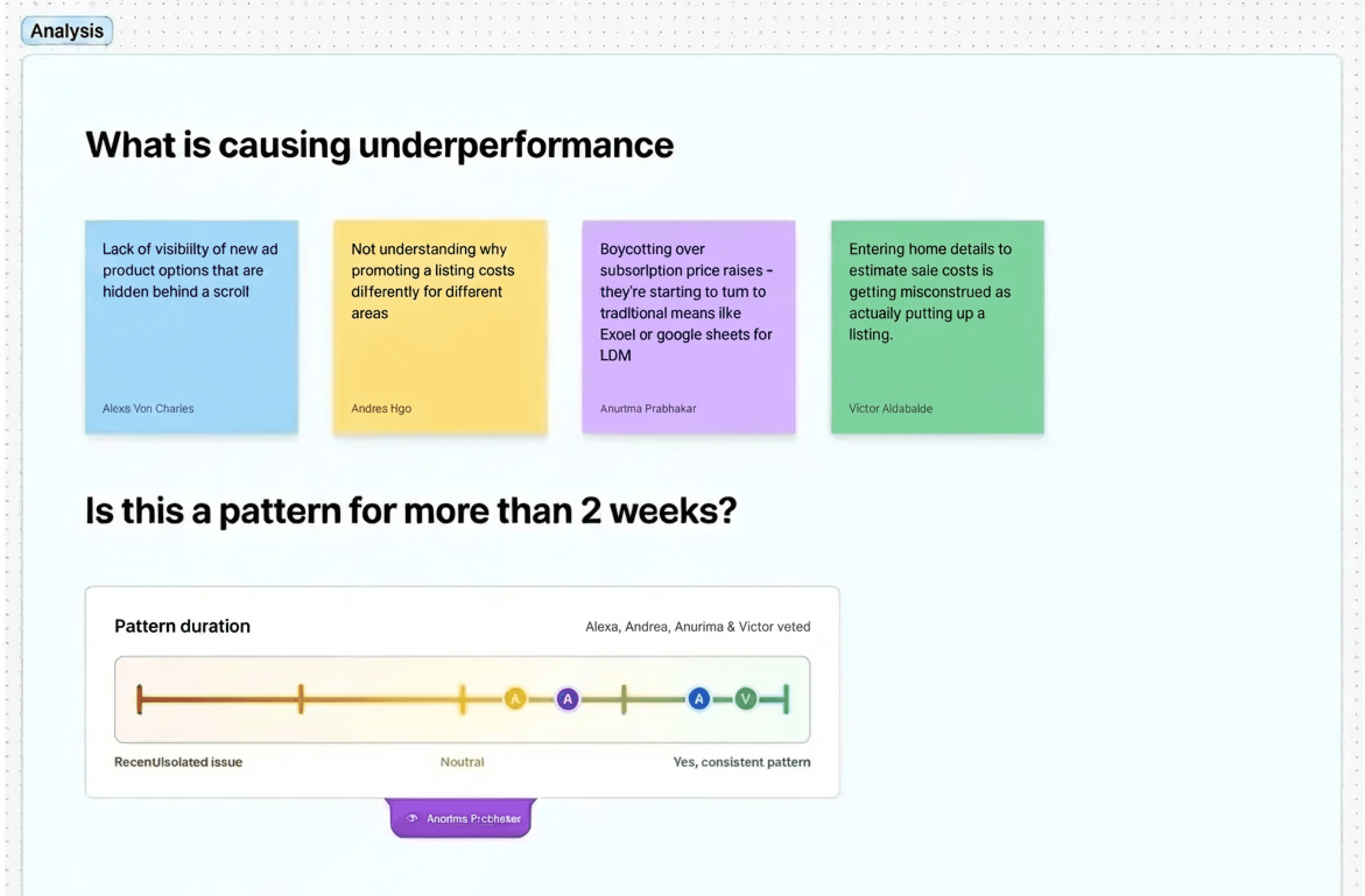
Sneak peek at one of the phases of our weekly retros
Implementation phase
Learnings
Let's be real. With any projects, there comes some rough times. Especially so when there's a time crunch and a lack of resources.
In this case, this was a matter of people. I had one researcher for this project, and given the weight of it on the potential business impact, we couldn't give the due research for it before jumping the gun.
Once the product was released, I followed up very quickly with a ratings feature that would prove to be useful throughout all new features within the platform. Now, we could gather not only discrete numbers in the thousands for thumbs up and downs, but also - actual testimonials or improvements requested from users.
The results
The redesigned Upsell flow resulted in an additional earning of SGD $863K/year since 2023. From our mass ratings feature, user satisfaction for the upsell (or upgrade - as deemed by users) increased by 69%.
+SGD $863K/Year
Monetization impact since 2023
The redesigned upsell flow generated an additional SGD $863K per year by embedding upgrades naturally into core listing journeys.
+69% user satisfaction
Improved clarity and perceived value
Mass ratings showed a 69% uplift in satisfaction for upsell experiences, driven by clearer positioning and stronger perceived benefits of upgrading.